





Venison Broth
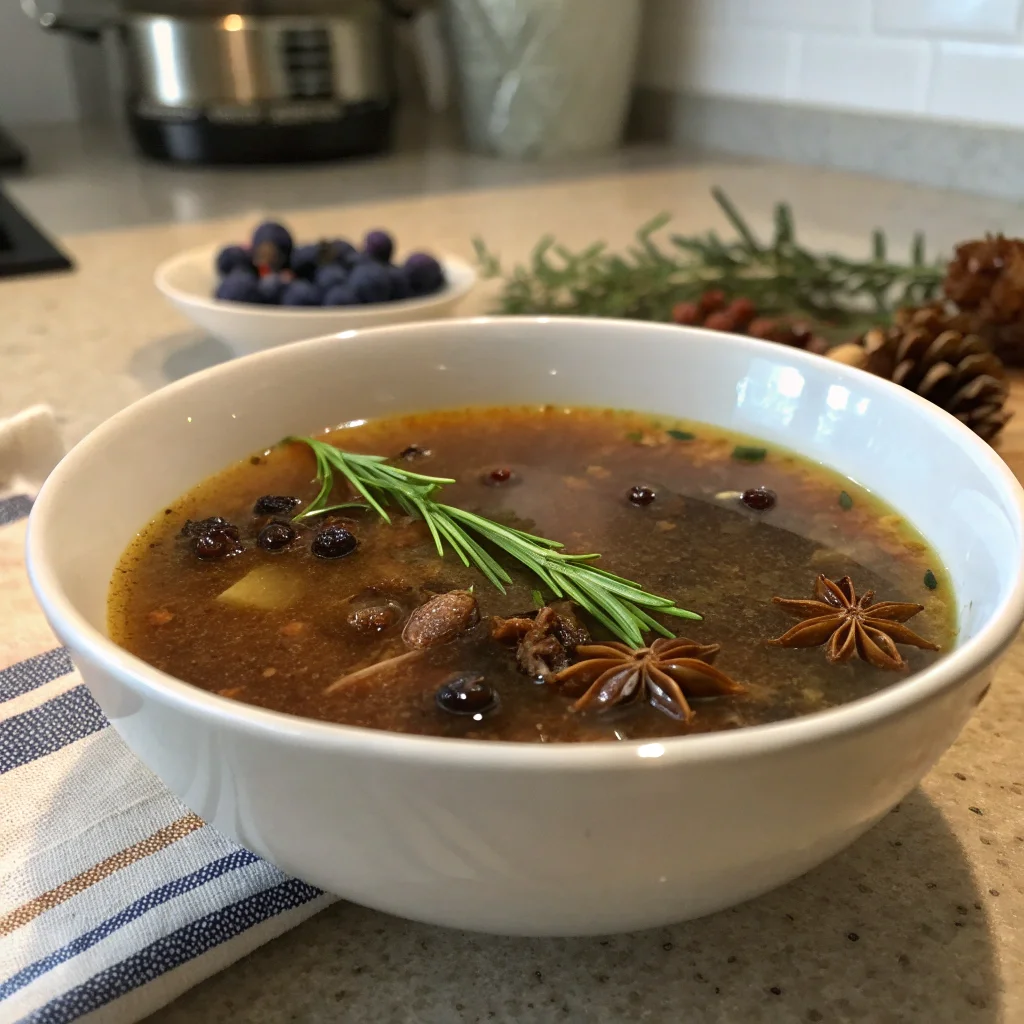
Ingredients
- 4 pounds venison bones (deer, antelope, moose, or elk)
- 4 tbsp olive oil
- salt
- 1 tbsp crushed juniper berries
- 2 tbsp fresh rosemary
- 6 garlic cloves, crushed
- 1 tbsp black pepper
- 4 chopped tomatoes
- 1 tbsp dried thyme
- 2 star anise pods
- 4 bay leaves
- 1 medium onion, chopped
- 3 carrots, chopped
- 3 celery sticks, chopped
Step-by-Step Instructions
- Coat the bones with olive oil and salt well, then roast in a 400-degree oven until brown, about 45 minutes to 1 hour. If you can stand it, keep some meat on the bones - shanks are ideal for this. It will make a better broth. Put the bones in a large stockpot. I saw the bones into large pieces with a hacksaw; this lets me fit more bones into the pot, again, making a richer broth. Cover with water and bring to a simmer over medium-high heat.
- Skim the froth that forms on the surface and simmer very gently for 2-3 hours. You want the broth to steam and burble a little, not roil.
- Add the juniper berries, rosemary, garlic, black pepper, tomatoes, thyme, star anise, bay leaves, onion, carrots, and celery. Simmer for another 2 hours.
- Using tongs, grab out all the bones and large bits and discard. Using a slotted spoon, remove whatever else you can and discard.
- Set up a fine-mesh sieve over another large pot and line the sieve with cheesecloth or a paper towel. Slowly pour the venison broth through the cheesecloth-lined sieve. Discard the dregs in the broth pot, which will be loaded with sediment and other bits.
- Add salt to the strained broth to taste and pour into quart jars and freeze (or steam-can - you cannot can broth in boiling water). If you freeze, leave a lot of space at the top of the jar or the jars will crack when the broth freezes. Use within 9 months.
Common Problems and Solutions
Q: Why is my broth cloudy instead of clear?
A: You're probably boiling it too hard. Keep the heat low so the broth just steams and burbles gently - a rolling boil will break up solids and make it cloudy. Also make sure to skim the froth thoroughly at the beginning.
Q: Can I use this broth interchangeably with beef stock in recipes?
A: Be careful - this broth is stronger and more intensely flavored than regular beef stock. Use it sparingly at first until you know how the wild game flavor works in your recipe. It's great for stews and soups but can overpower delicate dishes.
Q: How long should I roast the bones?
A: Roast at 400°F for 45 minutes to 1 hour until deeply browned. The browning creates rich flavor through the Maillard reaction, so don't skip this step or rush it.
Tips and Techniques
Keep some meat on the bones, especially if you can use shanks - this makes a richer, more full-bodied broth. Sawing the bones into pieces with a hacksaw allows more bones to fit in the pot and exposes more marrow, which adds body and richness.
Ingredient Substitutions
- venison bones: beef bones or mixed game bones
- juniper berries: 1/4 cup red wine
- fresh rosemary: 1 tbsp dried rosemary
Equipment Needed
- Large stockpot (8-12 quarts)
- Hacksaw (for cutting bones)
- Fine-mesh sieve
- Cheesecloth or paper towels
- Large roasting pan
- Tongs and slotted spoon
- Quart jars for storage
Historical Context
Wild game broths have been part of Louisiana cooking since before Cajuns arrived, with Native Americans making similar preparations. The addition of aromatics like juniper berries reflects the French influence on Cajun cuisine.