





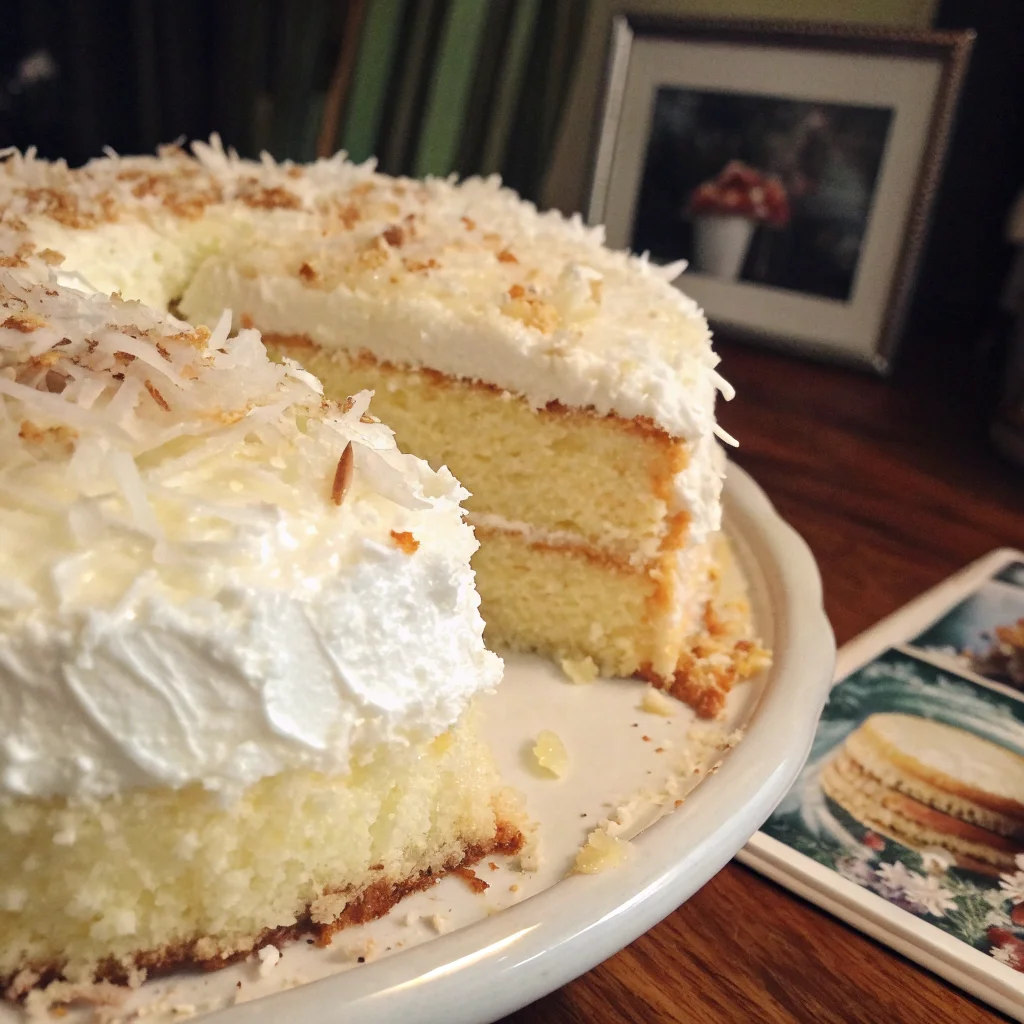
Sour Cream Coconut Cake
Ingredients
- 1 box white cake mix
- 1 (16 oz) tub sour cream large
- 2 cups sugar
- 18 ounces frozen coconut
Step-by-Step Instructions
- Allow the coconut to thaw. Preheat oven according to cake mix package directions. Bake white cake mix for a two-layer cake according to package directions and let cool completely before icing.
- No Cook Icing - In a mixing bowl, add the sour cream, sugar and 12 oz of the coconut and mix well. Cover the cool layers of cake with icing and pat on remaining 6 oz coconut. Let sit for at least 2 hours before cutting cake to allow icing to set.
Common Problems and Solutions
Q: Why is my icing too runny?
A: Make sure you're using full-fat sour cream and that the sugar is fully mixed in. If it's still too loose, refrigerate the icing for 15-20 minutes before spreading on the cake. The icing will firm up as it sits.
Q: Can I ice the cake while it's still warm?
A: No, the cake layers must be completely cool or the icing will melt and slide off. Let the layers cool for at least an hour at room temperature.
Tips and Techniques
Store this cake in the refrigerator since the sour cream icing is perishable. It actually tastes even better after sitting overnight as the flavors meld together. Let it come to room temperature for about 20 minutes before serving for the best texture.
Ingredient Substitutions
- frozen coconut: sweetened flaked coconut
- white cake mix: yellow cake mix
- sour cream: Greek yogurt
Equipment Needed
- Two 8-inch or 9-inch round cake pans
- Mixing bowls
- Spatula for spreading icing
Historical Context
Southern cooks have long used sour cream in desserts to add moisture and a subtle tang that balances sweetness. This no-cook icing approach became popular in the mid-20th century as a time-saving alternative to traditional frosting.