





Pineapple Cream Mold
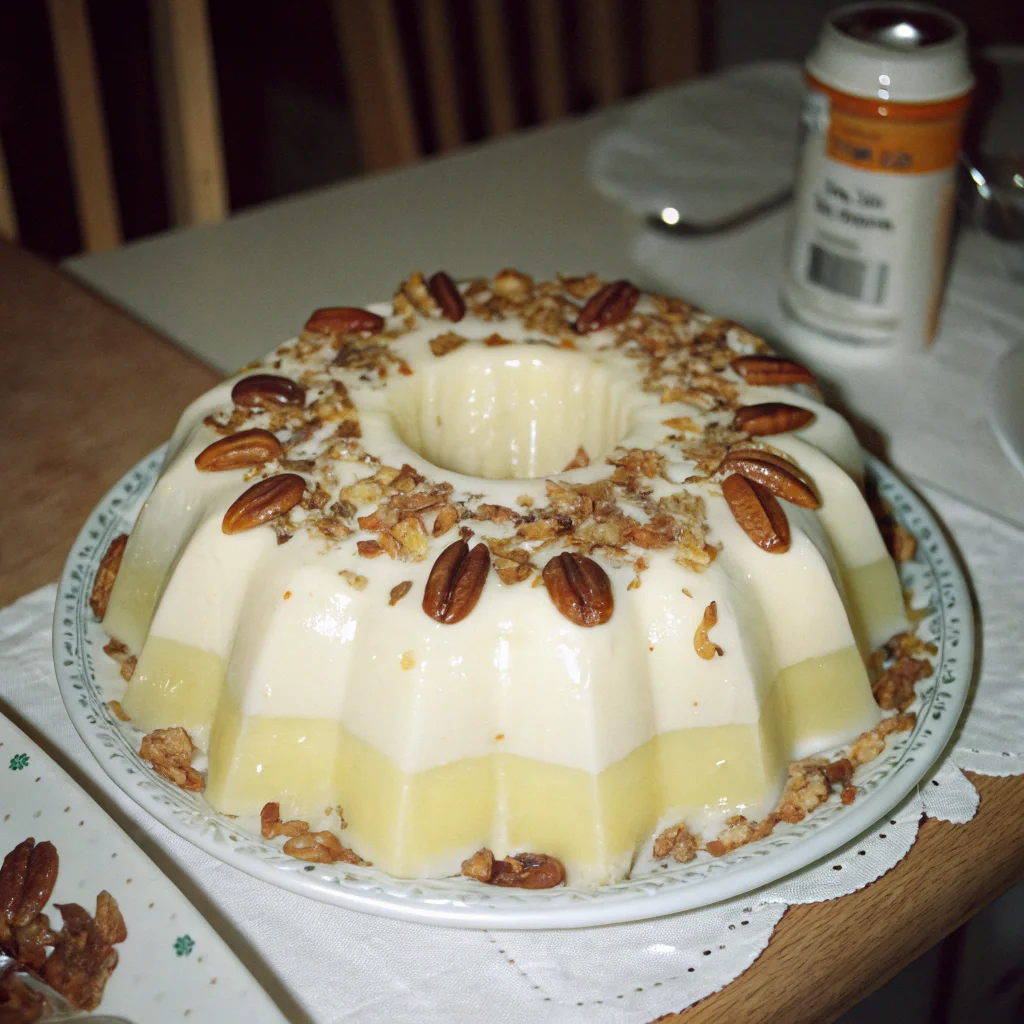
Ingredients
- 2 (3 oz) packages of lemon jello
- 2 cups hot water
- 1 (20 oz) can crushed pineapple
- 2 cups sour cream
- 1/2 cup chopped pecans
Step-by-Step Instructions
- In a medium to large glass bowl, dissolve jello in hot water. Stir until completely dissolved, about 2 minutes.
- Cool the jello mixture slightly (about 10 minutes at room temperature), then add the crushed pineapple with its juice, sour cream, and chopped pecans. Stir until well combined and smooth.
- Pour into a 1½ quart mold sprayed with cooking spray. Cover and refrigerate overnight (at least 8 hours) until completely set and firm.
Common Problems and Solutions
Q: Why didn't my mold set properly?
A: Make sure you let it chill for the full overnight period (at least 8 hours). Also, if you added the other ingredients while the jello was too hot, it can prevent proper setting. Let the dissolved jello cool until just warm to the touch before mixing in the pineapple, sour cream, and pecans.
Q: How do I get the mold out of the pan without breaking it?
A: Dip the bottom of the mold briefly (about 10-15 seconds) in warm water to loosen the edges. Place your serving platter on top, then quickly invert both together. The mold should release easily. If it doesn't, dip again for a few more seconds.
Tips and Techniques
Don’t skip draining some of the pineapple juice if your can seems extra juicy—too much liquid can prevent the mold from setting firmly. For easier unmolding, use a silicone mold or spray your traditional mold generously with cooking spray before filling.
Ingredient Substitutions
- sour cream: plain Greek yogurt or regular yogurt
- crushed pineapple: pineapple tidbits (drained and chopped)
- lemon jello: lime jello or orange jello
- chopped pecans: chopped walnuts or slivered almonds
Equipment Needed
- 1½ quart gelatin mold or bundt pan
- Medium to large glass mixing bowl
- Whisk or spoon for stirring
Historical Context
Gelatin molds became wildly popular in America after the invention of flavored gelatin powders in the early 1900s, and reached peak popularity in the 1950s-60s when they appeared at every church supper and family gathering. In Louisiana, creative cooks added local pecans to give these molds a distinctly Southern touch.