





Paw Paw's Catfish Courtbouillon II
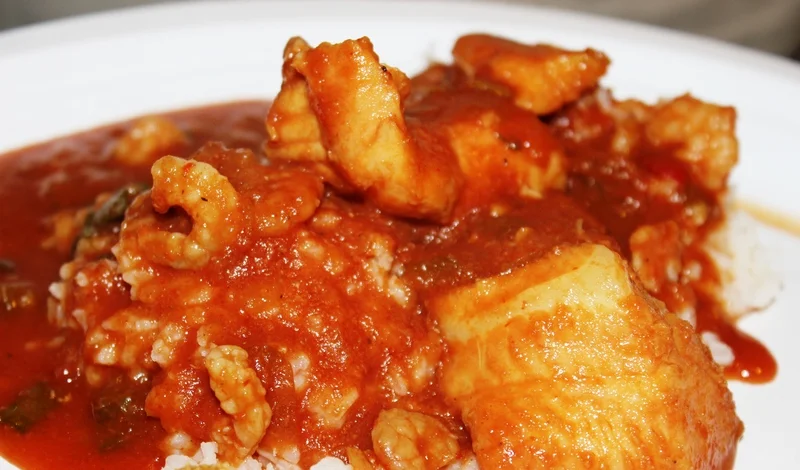
Ingredients
- 3-4 pounds catfish (keep filets as whole as possible)
- 1 cup chopped bell pepper
- 1 cup chopped onion
- 1 cup chopped celery
- 1 gallon water
- 6 cups tomato sauce
- 2 tbsp parsley chopped fine
- 1/2 cup green onions chopped
- 1 tbsp Worcestershire sauce
- 2 tsp salt
- 2 1/2 tsp red pepper (although I cut it to 1 1/2 -2 tsp)
- 2 1/2 tsp black pepper
- 2 tsp garlic salt
- 3 tsp paprika
- 1 bay leaf
- 1/2 cup flour
- 1/2 cup oil for roux
Step-by-Step Instructions
- In a medium heavy gauge stockpot, boil the 3-4 lbs of catfish filets in one gallon of water to make fish stock. Approximately 10 minutes.
- Carefully remove fish from the water and set aside.
- In a separate pot, make the roux using 1/2 cup flour and 1/2 cup oil. Cook the roux, stirring constantly, until it reaches a medium brown color (about 15-20 minutes).
- Add the chopped bell pepper, onion, and celery to the fish stock along with the tomato sauce, parsley, green onions, Worcestershire sauce, salt, red pepper, black pepper, garlic salt, and paprika. Add the roux to the stock and stir to combine.
- Bring to a boil, then reduce heat and boil all of the ingredients for one hour. The longer cooking time allows the roux to fully incorporate and the flavors to develop.
- Add the bay leaf, then carefully add the catfish filets back to the pot. Simmer for 30 minutes. To prevent scorching and breaking up the fish, shake the pot from side to side rather than stirring.
- Serve over rice and enjoy.
Common Problems and Solutions
Q: Why is my courtbouillon too thin or watery?
A: Make sure to boil the stock and roux mixture for the full hour to allow it to reduce and thicken. Don't skip the roux - it's essential for both flavor and proper consistency.
Q: My catfish broke apart into tiny pieces. What went wrong?
A: Keep the filets as whole as possible when you remove them from the stock, and when returning them to the pot, handle gently. Most importantly: shake the pot side to side instead of stirring during the final 30-minute simmer. Stirring will shred the fish.
Q: The roux is lumpy in my courtbouillon. How do I fix this?
A: Make sure the roux is smooth before adding it to the stock. It helps to whisk it well in the separate pot, and when adding to the stock, stir immediately to incorporate. If you still have lumps, you can strain the courtbouillon before adding the fish back.
Tips and Techniques
This recipe calls for boiling the courtbouillon for one hour instead of the shorter time some recipes suggest - trust that timing, as it allows the roux to fully integrate and the flavors to meld. The shaking technique (instead of stirring) in the final simmer keeps your catfish in nice chunks rather than shreds.
Ingredient Substitutions
- catfish: redfish, drum, or any firm white fish
- tomato sauce: crushed tomatoes or tomato puree
- bell pepper, onion, and celery: can use 3 cups of pre-chopped "trinity" mix
Equipment Needed
- Heavy gauge stockpot (for boiling catfish and making the courtbouillon)
- Separate pot for making the roux
- Slotted spoon or spider strainer (for removing fish from stock)
- Long-handled wooden spoon (for stirring the roux)
Historical Context
Courtbouillon (pronounced coo-bee-yon in Cajun country) is one of those classic South Louisiana dishes that shows the French influence on Cajun cooking, though it’s evolved into something distinctly regional with tomatoes and bold seasoning.