





Oven Made Roux
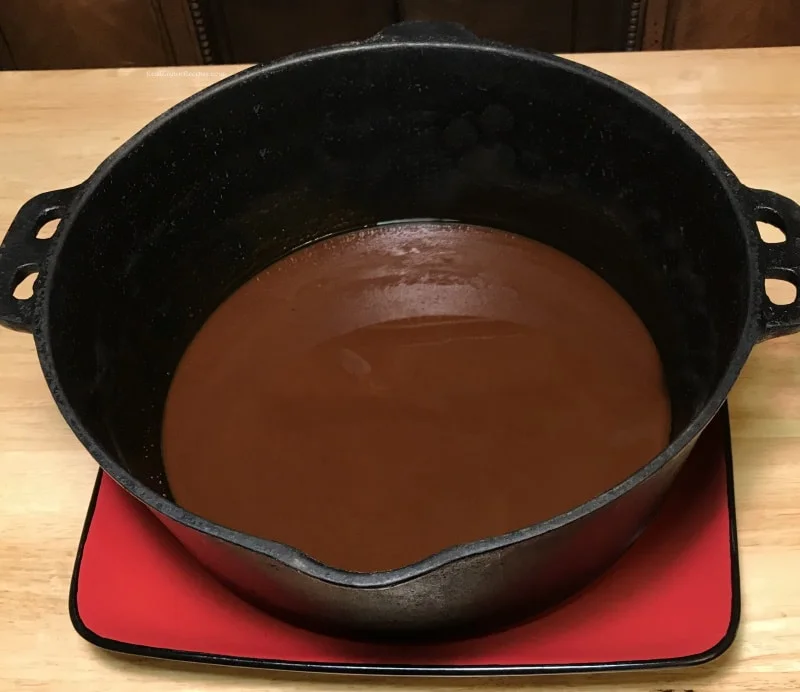
Ingredients
- all-purpose flour
- canola oil
- heavy duty pot or cast iron pot
Step-by-Step Instructions
- There are different ways to make a roux in the oven.
- OVEN ROASTER PAN with OIL and FLOUR
- Preheat oven to 350°
- Whisk together thoroughly equal parts canola oil and all-purpose flour in an oven roaster or heavy pot, and bake for two hours
- No stirring is required - You can prepare the oven-baked roux while you prepare the vegetables for a gumbo, stew or etouffee and the side dishes
- Let cool and store in glass jar
- Note that cooking times are approximate; you may have to cook the roux a longer to get the desired color.
- OVEN ROASTER PAN with FLOUR only
- Distribute 2 - 6 cups of flour evenly over the dry bottom of a cast iron skillet or heavy Dutch oven.
- Place in a preheated 400 degree oven for approximately an hour. Stir after the first 30 minutes; then again 15 minutes later
- Alternatively, you can put the desired amount of flour on a baking sheet and bake it at 350 approximately 25 to 60 minutes.
- RECOMMENDED METHOD
- Preheat oven to 350°
- 2 cups flour
- 1 1/2 cups of canola oil
- Whisk together the oil and flour in a cast iron pot
- Bake for two hours, remove pan and stir.
- Increase temperature to 400 degrees, and bake for 30 minutes more or until desired color.
Common Problems and Solutions
Q: Why isn't my oven roux getting dark enough?
A: Each oven varies in temperature accuracy. If your roux isn't reaching the desired chocolate-brown color after the recommended time, increase the temperature to 400° for the final 30 minutes, checking every 10 minutes. The flour-only method tends to produce a darker roux than the oil-and-flour method.
Q: Can I make oven roux ahead of time?
A: Absolutely! Once cooled, store your roux in a glass jar in the refrigerator for up to 3 months. It'll solidify when cold but will melt quickly when added to hot liquid. This is a great make-ahead technique for busy cooks.
Tips and Techniques
The oven method is perfect for beginners nervous about burning a stovetop roux. Since there’s minimal stirring required, you can multitask and prepare your trinity (onions, celery, bell pepper) and other ingredients while the roux bakes. Just remember that the color will continue to darken slightly even after removing from the oven, so pull it when it’s just shy of your target shade.
Ingredient Substitutions
- canola oil: vegetable oil, peanut oil, or bacon grease
- all-purpose flour: rice flour or gluten-free flour blend
Equipment Needed
- cast iron pot or Dutch oven
- oven roaster pan
- whisk
- glass jar for storage
Historical Context
Roux is the foundation of Cajun and Creole cooking, brought to Louisiana by French settlers. Traditionally made on the stovetop with constant stirring, the oven method became popular in recent decades as a safer, less labor-intensive alternative that still produces the nutty, toasted flavor essential to authentic Louisiana dishes.