




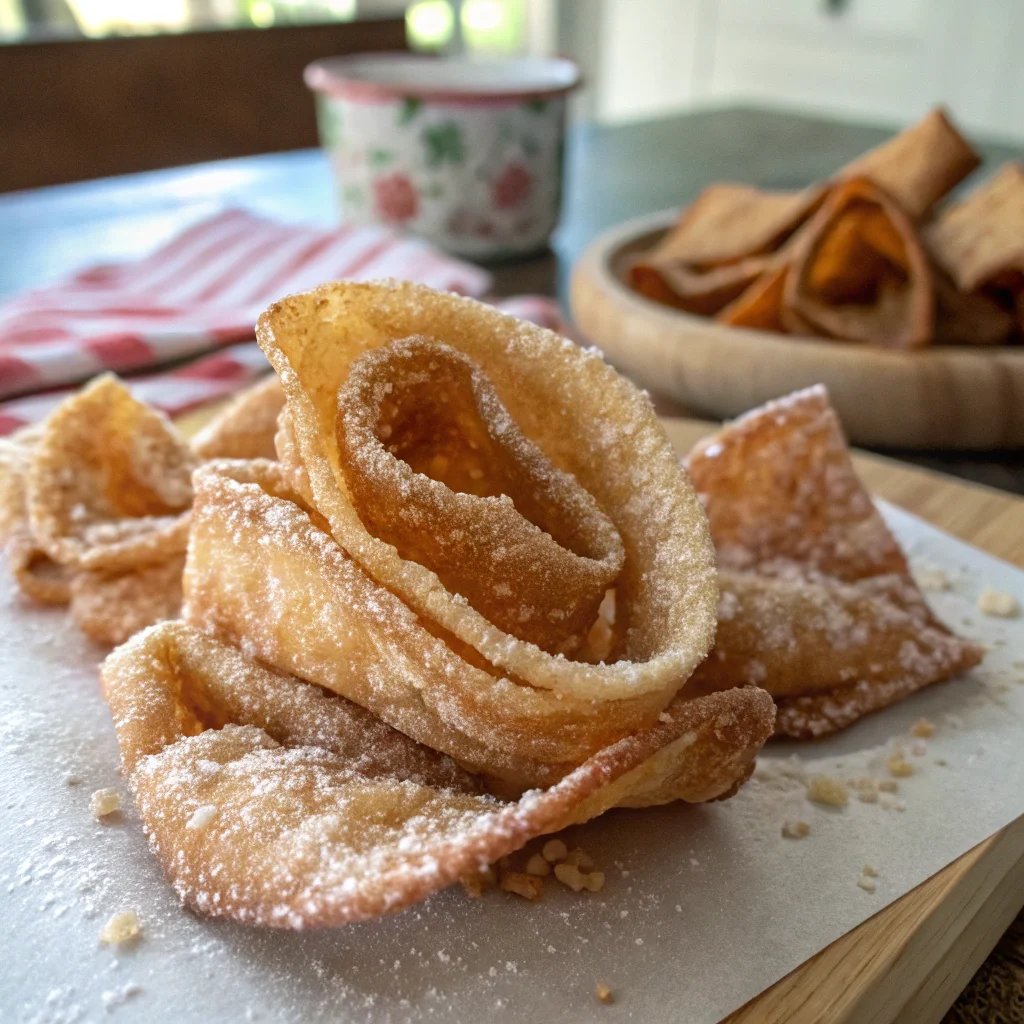
Oreilles De Cochon - Pigs Ear Doughnut
Ingredients
- 1 cup flour
- 1/4 tsp salt
- 1 (12 oz) can syrup - cane, corn or sugar
- Shortening for deep frying
Step-by-Step Instructions
- In large glass bowl, sift flour and salt together. Add sufficient water to make stiff dough, approximately 1/4 cup. Divide the dough into about 12 portions, about the size of a walnut.
- On a floured board, roll out one portion until it is paper thin. Drop into hot deep fat (350°F), giving a swift twist to the center of each with a long handled fork as soon as it hits the grease. This forms the ear. Cook until a very light brown, about 30-45 seconds. Cook portion one after the other, do not try to cook more than one at a time.
- In a large flat pot, boil syrup until it reaches soft ball stage (235-240°F), where a few drops form a soft ball when dropped in cold water. Dip each ear into this hot syrup and place around a large platter to cool.
Common Problems and Solutions
Q: Why does my dough tear when I roll it paper-thin?
A: The dough may be too dry. Add water a teaspoon at a time until you achieve a stiff but pliable dough that can stretch thin without breaking. Let the dough rest for 5-10 minutes before rolling to relax the gluten.
Q: How do I know when the syrup has reached soft ball stage?
A: Use a candy thermometer for 235-240°F, or test by dropping a small amount into cold water - it should form a soft, pliable ball that flattens when removed. If it dissolves, keep cooking; if it's hard, you've gone too far.
Q: Why are my oreilles tough instead of crispy?
A: The dough may be too thick, or the oil temperature may be too low. Roll the dough until it's translucent and nearly see-through, and maintain oil temperature at 350°F. They should cook very quickly, just 30-45 seconds.
Tips and Techniques
Work quickly when twisting the dough in the hot oil - the signature ear shape forms in the first few seconds. Keep the rolled portions covered with a damp towel while working to prevent drying. These are best enjoyed the day they’re made, as they lose their delicate crispness over time.
Ingredient Substitutions
- cane syrup: light corn syrup or a mix of corn syrup and molasses
- shortening for frying: peanut oil or vegetable oil
Equipment Needed
- Heavy pot or deep fryer for frying
- Candy thermometer (for both oil and syrup temperature)
- Rolling pin
- Long-handled fork for twisting
- Large flat pot for boiling syrup
- Large platter for cooling
Historical Context
This traditional Cajun pastry is closely related to French beignets and croquignoles, reflecting Acadian adaptations of French fried dough traditions. The candy-like syrup coating makes them especially popular during Mardi Gras celebrations.