





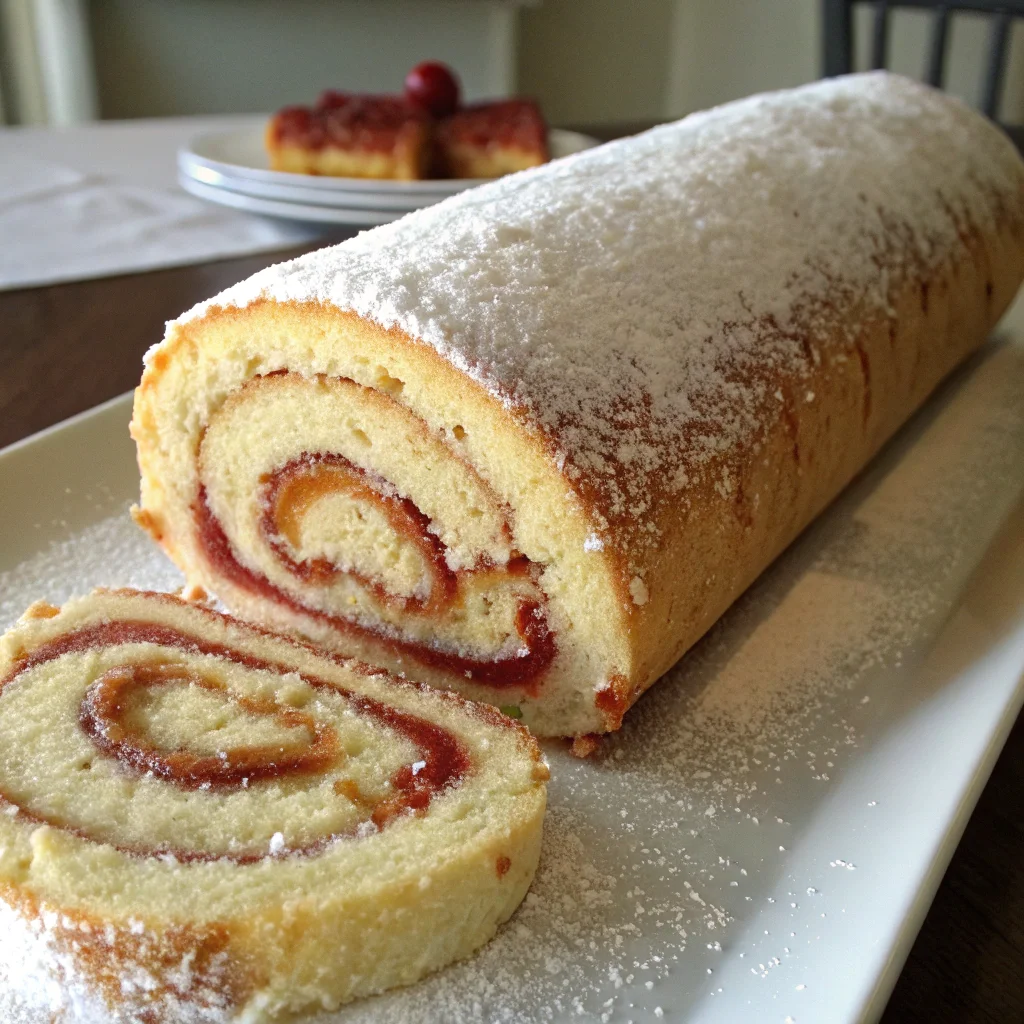
Mimi's Jelly Roll
Ingredients
- 5 eggs, separated
- 1/2 tsp vanilla extract
- 3/4 cup granulated sugar
- 3/4 cup cake flour, sifted
- 1/2 tsp double acting baking powder
- 1/4 tsp salt
- powdered sugar for dusting
- 3/4 cup tart jelly (such as raspberry, strawberry, or grape)
- sweetened whipped cream (optional, for serving)
Step-by-Step Instructions
- Preheat oven to 350°F. Generously grease a 10x15-inch jelly roll pan, line with waxed paper, then grease the paper.
- In a large bowl, combine egg yolks and vanilla extract and beat well. Gradually beat the granulated sugar into the egg yolks until light and fluffy, about 3-4 minutes.
- In a separate bowl, beat egg whites until stiff but not dry (they should form peaks that stand up but still look glossy).
- Gently fold the beaten egg whites into the yolk mixture, being careful not to deflate the whites.
- Sift the flour, baking powder, and salt together. Gently fold into the egg mixture until just combined.
- Spread the batter evenly into the prepared jelly roll pan, making sure it reaches all corners.
- Bake for 15 minutes or until the cake springs back when lightly touched and is golden brown.
- While the cake bakes, lay out a clean kitchen towel and dust it generously with powdered sugar.
- As soon as the cake comes out of the oven, immediately invert it onto the prepared towel. Carefully peel off the waxed paper.
- Starting from the narrow edge, roll the cake up in the towel (towel and all), lifting and pushing gently. Wrap the towel tightly around the roll and let cool completely on a rack with the open edge turned down (about 30 minutes).
- Once cooled, gently unroll the cake and spread evenly with tart jelly, leaving about 1/2 inch border around the edges.
- Roll the cake back up (this time without the towel), using the towel underneath to help guide it if needed.
- Place seam-side down on a serving platter and dust generously with powdered sugar. Slice and serve with sweetened whipped cream if desired.
Common Problems and Solutions
Q: Why did my cake crack when I rolled it?
A: The cake must be rolled while still warm and pliable. If it cools before rolling, it will crack. Also, don't overbake—a dry cake is more prone to cracking. Roll it immediately after inverting onto the sugared towel.
Q: Can I fill it with something other than jelly?
A: Yes! Try lemon curd, chocolate-hazelnut spread, or even a thin layer of cream cheese frosting. Just make sure the filling isn't too thick or the cake will crack when rolled.
Q: Why did my egg whites deflate?
A: Fold gently using a rubber spatula with a scooping motion from the bottom up. Don't stir or beat—this deflates the whites. Also make sure no yolk got into the whites, as fat prevents proper whipping.
Tips and Techniques
Beat the egg yolks and sugar until very light and fluffy—this creates the cake’s structure. When folding in the egg whites and flour, use a gentle hand to keep the batter airy. The key to a crack-free roll is working quickly while the cake is still warm and rolling it with the towel first to set the shape.
Ingredient Substitutions
- cake flour: all-purpose flour minus 2 tablespoons, replaced with 2 tablespoons cornstarch
- tart jelly: seedless jam or preserves
Equipment Needed
- 10x15-inch jelly roll pan (also called a half sheet pan)
- Electric mixer
- Clean kitchen towel or linen towel
- Waxed paper or parchment paper
- Fine mesh sifter
Historical Context
Jelly roll cakes became popular in America in the late 1800s and have been a Southern dessert staple ever since. The technique of rolling a thin sponge cake dates back even further to European traditions.