





Lemon Meringue Pie
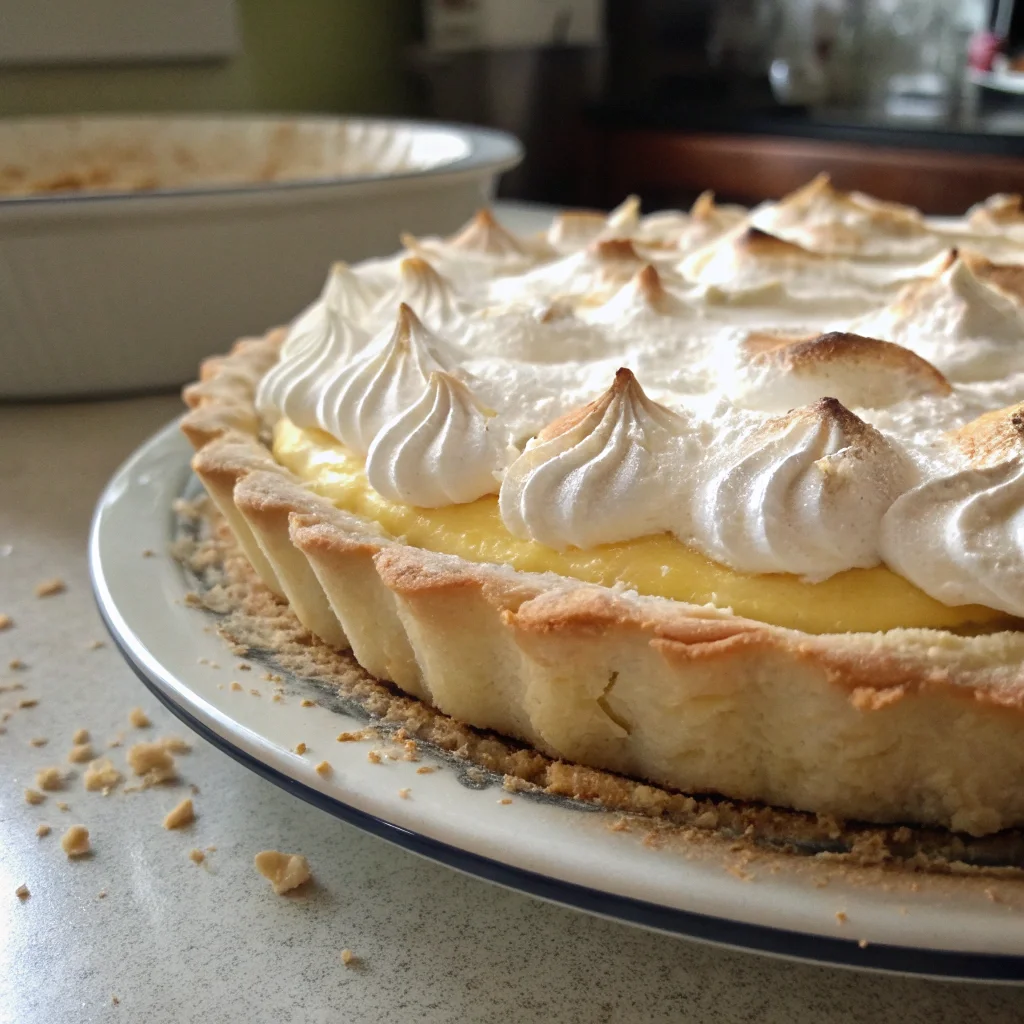
Ingredients
- Lemon Filling
- 1 1/4 cup sugar
- 1/4 cup cornstarch and 3 tablespoon of flour
- 1/4 tsp salt
- 1 1/2 cup water
- 3 egg yolks slightly beaten
- 1/4 cup lemon juice
- 1 tbsp grated lemon rind
- 1 tbsp butter
- Meringue
- 3 egg whites
- 1/4 tsp cream of tartar
- 1/3 cup sugar
- Crust
- 1 cup all-purpose flour
- 1/2 tsp salt
- 6 tbsp shortening
- 2 to 3 tbsp cold water
Step-by-Step Instructions
- Preheat oven to 450°F for the pie crust. For the plain pastry crust: In a large bowl combine the flour and salt. Cut in half of the shortening with a pastry blender until the mixture resembles coarse meal. Then add the remaining shortening until the particles are the size of small peas. Add water a little at a time mixing lightly with a fork. Shape the dough into a firm ball with your hands then roll out on a lightly floured board. Place loosely in a 9-inch pan. Cut 1 inch larger than the pan. Fold under. Moisten the rim of the pan and flute the edge. For baked pastry, prick sides and bottom of pastry with a fork to prevent shrinking. Bake at 450°F for 10-12 minutes until golden. Let cool completely.
- Lemon Filling: Combine the sugar, cornstarch, flour and salt in a saucepan. Add water gradually and stir until smooth. Cook over medium heat stirring constantly until mixture thickens and becomes translucent, about 8-10 minutes. Remove from heat and add a small amount of the cooked mixture to the beaten egg yolks to temper the eggs. Stir the egg yolks into the mixture. Return to heat and bring to a gentle boil for a couple of minutes stirring constantly. Remove from heat and gently stir in the lemon juice, lemon rind and butter until well combined.
- Meringue: Beat the egg whites and cream of tartar until foamy. Add the sugar gradually, about 1 tablespoon at a time. Continue to beat until soft peaks are formed and the meringue is glossy.
- Pour the hot lemon filling into the cooled baked pie crust. Immediately top with the meringue, spreading it to the edges of the crust to seal (this prevents the meringue from shrinking). Bake at 475°F for 8 to 10 minutes or until the meringue is lightly browned with golden peaks. Cool at room temperature for 1 hour, then refrigerate for at least 2 hours before serving.
Common Problems and Solutions
Q: Why is my meringue weeping or forming water droplets?
A: This happens when the meringue isn't sealed to the crust edges, when it's underbaked, or when the filling isn't hot when you add the meringue. Make sure to spread the meringue all the way to the crust edge and add it to hot filling.
Q: How do I prevent a soggy bottom crust?
A: Make sure to fully bake the crust before adding filling. Maw-Maw's tip: brush a slightly beaten egg white in the baked pie crust before filling—it creates a seal that helps prevent sogginess.
Q: Why did my meringue shrink away from the edges?
A: The meringue must be spread all the way to the crust edge to seal it completely. Any gaps will cause shrinking as it bakes. Also make sure your meringue has reached soft peaks before spreading.
Tips and Techniques
Temper the egg yolks carefully by adding just a small amount of hot filling first—this prevents them from scrambling. For the fluffiest meringue, make sure your bowl and beaters are completely clean and grease-free, and add the sugar gradually while beating.
Ingredient Substitutions
- shortening: cold butter or lard
- fresh lemon juice and rind: bottled lemon juice
Equipment Needed
- 9-inch pie pan
- Pastry blender or two forks
- Rolling pin
- Saucepan (for filling)
- Electric mixer or whisk (for meringue)
Historical Context
Lemon meringue pie became popular in America in the 19th century and was a staple of community cookbooks and home baking by the 1960s. The Robin Hood Flour cookbook was a common resource for home bakers learning to make pastry from scratch.