





Kumquat Bread
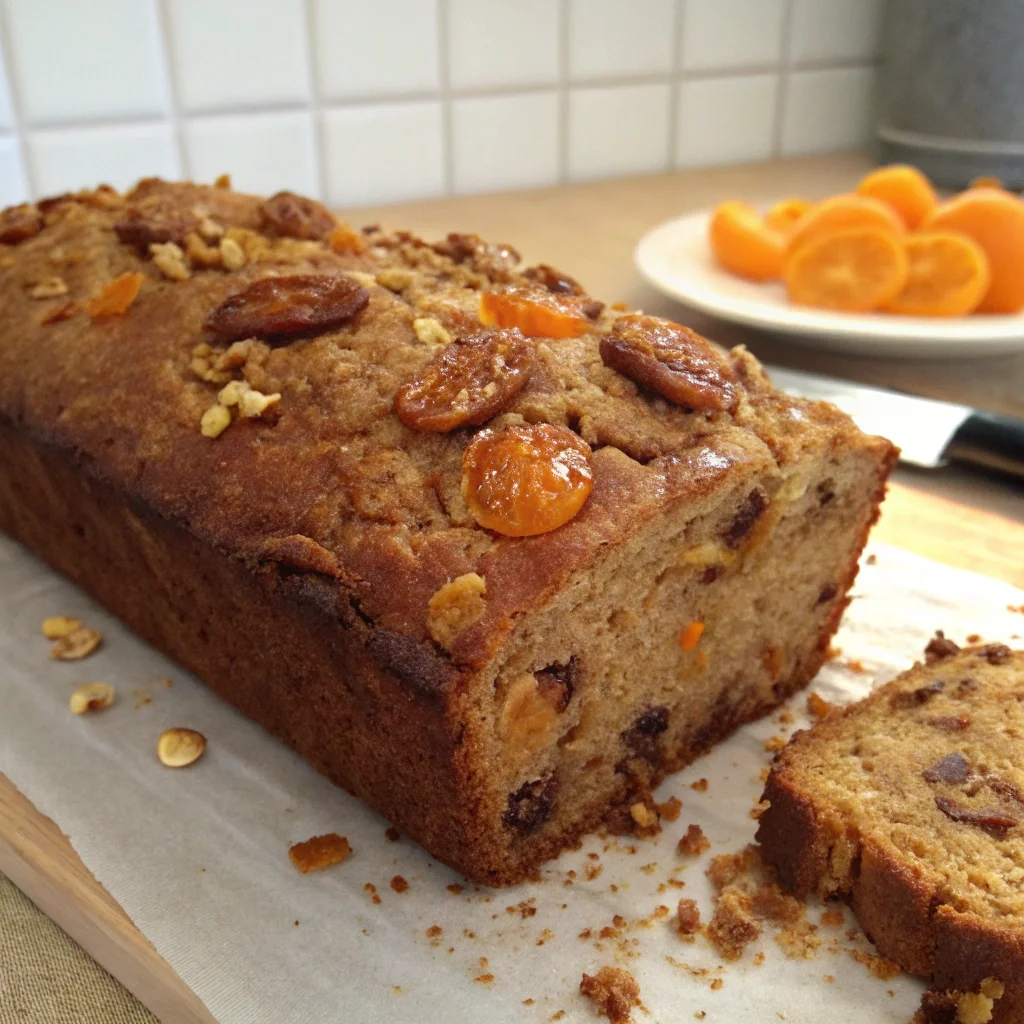
Ingredients
- 2 teaspoon baking powder
- 1 teaspoon soda
- 1/2 teaspoon salt
- 3 cups flour
- 2/3 cup oil
- 1 cup brown sugar
- 4 eggs
- 2/3 cups milk
- 2 cups whole seeded kumquat preserves
- 1 cup chopped nuts (pecans or walnuts)
Step-by-Step Instructions
- Preheat oven to 350 degrees. Grease and lightly flour the pans you are using (two loaf pans or one bundt pan).
- Mix together flour, salt, soda and baking powder in a medium bowl and set aside.
- In a large bowl mix together oil, brown sugar and eggs until well combined.
- Add milk and combine thoroughly.
- Stir in the kumquat preserves and nuts until evenly distributed.
- Add the flour mixture to the wet ingredients and stir just until combined. Do not overmix.
- Pour batter into prepared pans and bake at 350 degrees for one hour, or until a toothpick inserted in the center comes out clean.
- Cool in pans for 10 minutes before turning out onto a wire rack to cool completely.
Common Problems and Solutions
Q: Why did my bread turn out dry?
A: Overmixing the batter after adding the flour can develop too much gluten, resulting in a tough, dry bread. Stir just until the flour is incorporated, and don't worry if there are a few small lumps.
Q: Can I use fresh kumquats instead of preserves?
A: No, this recipe specifically calls for kumquat preserves, which provide both sweetness and moisture. Fresh kumquats would be too tart and wouldn't provide the same texture.
Tips and Techniques
Make sure your kumquat preserves contain whole or chunked fruit, not just syrup. You can use pecans, walnuts, or your favorite nut. The bread freezes beautifully for up to 3 months—wrap tightly in plastic wrap, then foil.
Ingredient Substitutions
- kumquat preserves: fig preserves or orange marmalade
- brown sugar: white granulated sugar
- oil: melted butter or melted coconut oil
Equipment Needed
- Two loaf pans or one bundt pan
- Mixing bowls
- Wire rack for cooling
- Toothpick for testing doneness
Historical Context
Kumquats were introduced to Louisiana in the late 1800s and became a popular dooryard citrus tree because they’re more cold-hardy than oranges or lemons. South Louisiana cooks traditionally preserve them whole to enjoy throughout the year in breads, cakes, and as a sweet condiment.