





Old Fashioned Fig Preserves II
Ingredients
- 1 quart water
- 6 cups sugar
- 3 quarts figs
- baking soda (for soaking)
Step-by-Step Instructions
- Cut the tips off the figs. Soak the figs in an ice chest of cold water with baking soda about an hour. This will clear the figs of their sticky fig milk. Drain well.
- Mix the water and 6 cups sugar to make syrup. Cook over medium to high heat until the mixture starts to boil.
- When the syrup is boiling, add 3 quarts of figs and let it come to a rolling boil. Let the mixture boil hard for a few minutes.
- Reduce to a very low heat and cook for 2 hours, stirring often to prevent sticking. More often than not depending on the quantity and the amount of figs in your pot, it may take up to 4 or 5 hours for the figs “to turn” into a jam-like consistency.
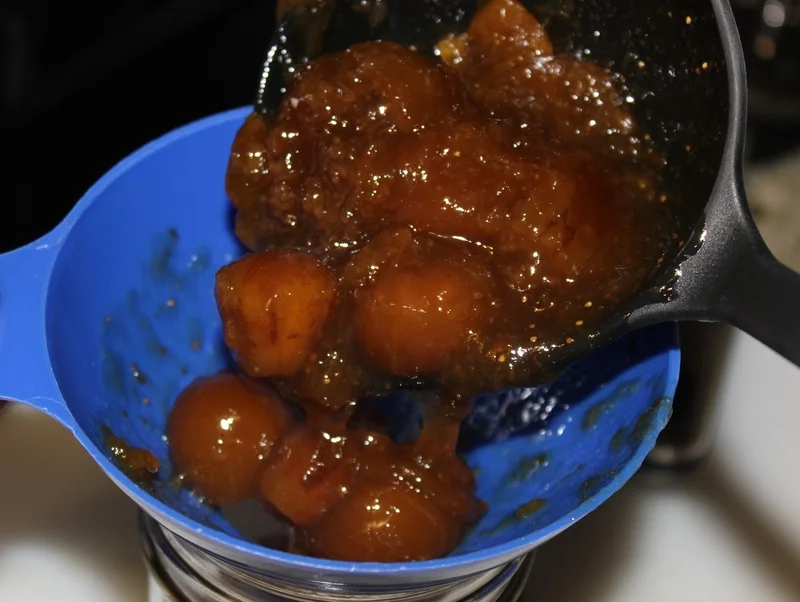
- Pour the fig mixture into prepared sterilized canning jars and seal immediately. The product will be perfect every time and the figs will be plump—not hard and shriveled.
Common Problems and Solutions
Q: Why are my figs hard and shriveled instead of plump?
A: You likely cooked them at too high a heat. After the initial boil, reduce to very low heat and be patient. The slow cooking is what keeps the figs plump and tender.
Q: How do I know when the figs have "turned"?
A: The mixture will thicken into a jam-like consistency and the figs will be translucent and tender. This can take 2-5 hours depending on your pot size and quantity. Stir regularly and watch for the syrup to coat the back of a spoon.
Q: Do I really need to soak the figs in baking soda?
A: Yes, this step removes the sticky white sap (fig milk) that can affect the texture and clarity of your preserves. Don't skip it.
Tips and Techniques
Stir more frequently as the preserves thicken to prevent scorching on the bottom. The timing can vary significantly based on your pot size and stove—trust the consistency and appearance more than the clock. Have your sterilized jars ready before you start cooking so you can seal the preserves while they’re still hot.
Ingredient Substitutions
- fresh figs: no good substitute
Equipment Needed
- large heavy-bottomed pot or canning pot
- ice chest or large bowl for soaking
- sterilized canning jars with lids
- canning funnel (helpful but optional)
- long-handled spoon for stirring
Historical Context
Fig preserves are a cornerstone of Louisiana preserving traditions, made during the short fig season when backyard trees produce abundantly. The high-sugar method (like this one) creates a sweeter, more traditional preserve compared to lower-sugar versions, and was the standard before commercial pectin became available.