





Fig Ice Cream
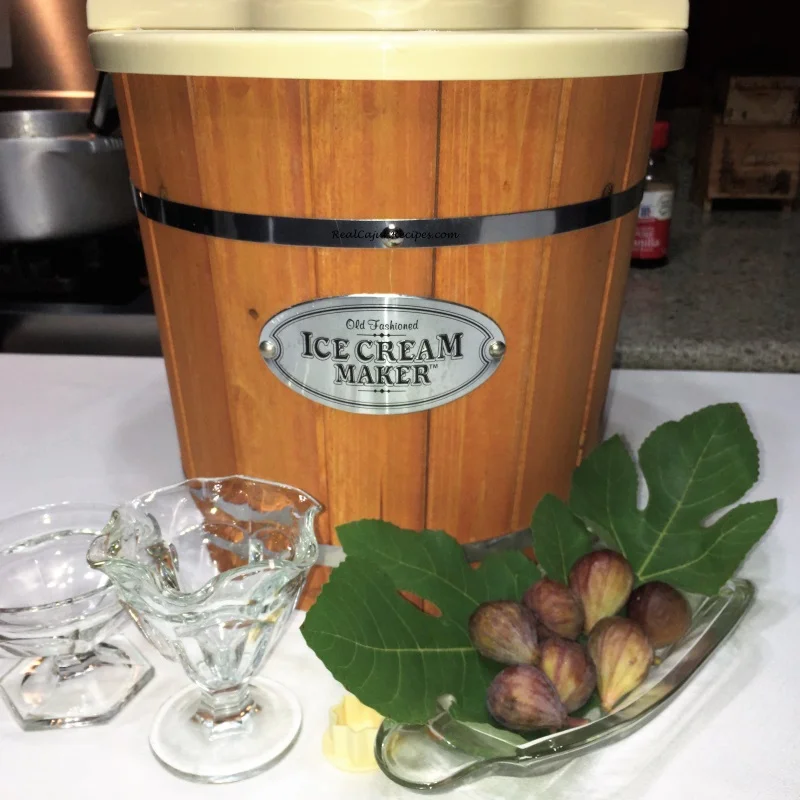
Ingredients
- 4 eggs
- 1 quart milk
- 2 cans evaporated milk (12oz)
- 1 tablespoon vanilla extract
- 1 quart very ripe figs, peeled
- 2 cups granulated sugar
- 1/2 cup fig syrup from fig preserves (optional)
Step-by-Step Instructions
- Beat eggs with mixer until very frothy, about 3-4 minutes.
- Add the sugar and mix well until fully incorporated.
- Gradually add the milk, evaporated milk, and vanilla and beat well.
- Add the figs and optional fig syrup and mix well.
- Pour mixture into a 1 gallon container and follow ice cream maker instructions.
- To freeze ice cream use eight parts ice and one part salt. Finely crushed ice melts faster and will hasten the freezing, so it’s best to crush the larger pieces. Then follow ice cream maker’s manufacturing instructions.
Common Problems and Solutions
Q: Why is my ice cream icy instead of creamy?
A: Make sure you're using very ripe figs and beating the eggs until very frothy (3-4 minutes). Also ensure your ice cream maker is properly chilled and you're using the correct ice-to-salt ratio (8:1). The eggs and evaporated milk provide richness that prevents iciness.
Q: Can I use figs that aren't fully ripe?
A: This recipe specifically calls for very ripe figs because they're sweeter and blend more smoothly into the ice cream base. Under-ripe figs will give you a less sweet, potentially grainy texture.
Tips and Techniques
For the best texture, peel the figs even though the peel is edible - it can create a slightly grainy texture in ice cream. If you have fig preserves on hand, adding the 1/2 cup fig syrup deepens the fig flavor beautifully.
Ingredient Substitutions
- evaporated milk: heavy cream or half-and-half
- very ripe fresh figs: fig preserves
Equipment Needed
- electric mixer or stand mixer
- ice cream maker (hand-crank or electric)
- 1 gallon freezer container
Historical Context
Fig trees were brought to Louisiana by European settlers and flourished in the subtropical climate. Fig ice cream became a cherished way for Cajun families to use up their abundant fig harvests, especially the very ripe figs that were too soft for preserving.