





Fig Bars
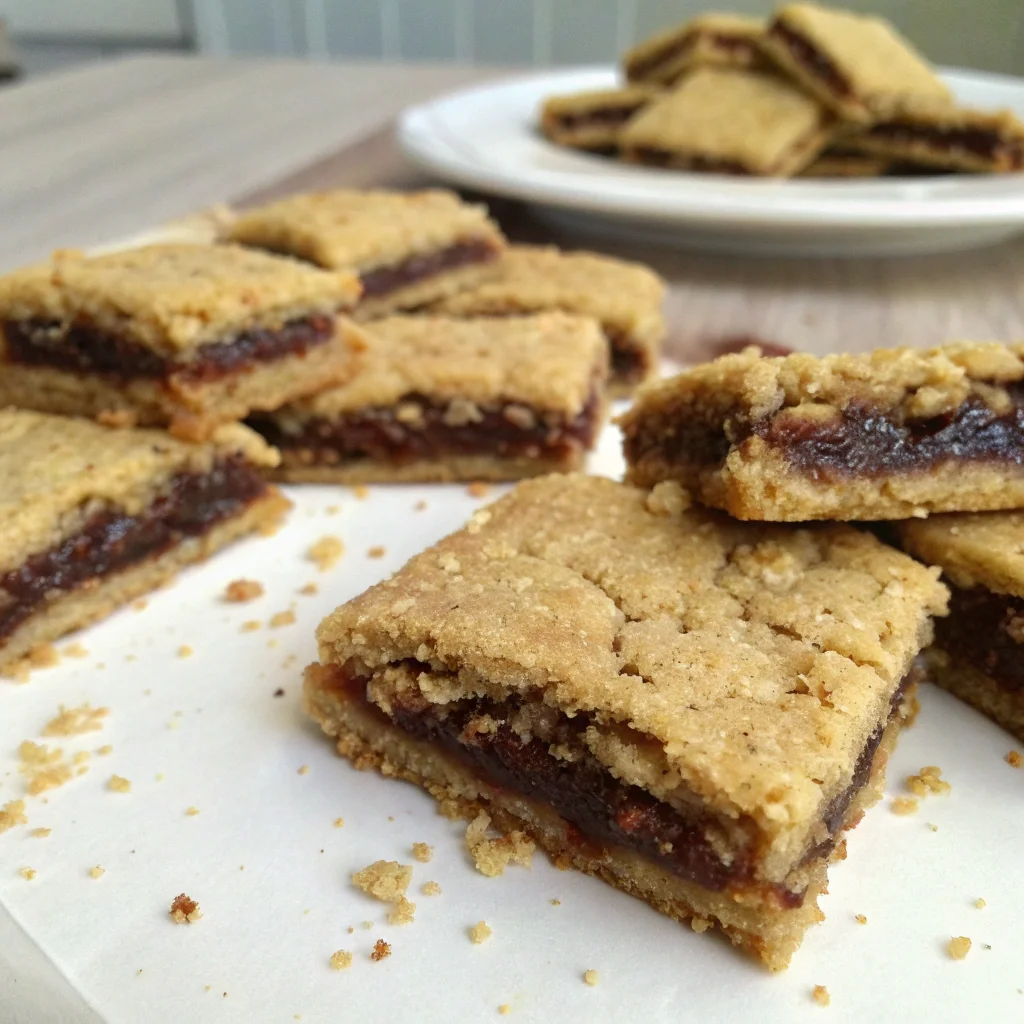
Ingredients
- 1/2 stick butter
- 1 cup sugar
- 2 eggs
- 1 tsp vanilla
- 2 1/2 cups sifted flour
- 1/4 tsp baking soda
- 1/2 tsp salt
- 1 pint fig preserves
Step-by-Step Instructions
- Cream butter and sugar until light and fluffy.
- Beat in eggs one at a time; add vanilla.
- Blend in sifted dry ingredients (flour, baking soda, salt).
- Chill dough in refrigerator until firm, about 1-2 hours.
- Preheat oven to 400°F.
- Divide dough in half and roll one half between two sheets of waxed paper into a rectangle shape, 11x15 inches. Place dough on cookie sheet.
- Cover with preserves which have been lightly mashed with the syrup.
- Moisten edges of dough with water and cover with remaining half of dough rolled into rectangular shape; seal edges.
- Bake in 400°F oven for 20 minutes or until golden brown.
- Immediately cut into bars. Cool on cake rack. Makes 3 dozen.
Common Problems and Solutions
Q: Why is my dough too sticky to roll out?
A: The dough needs adequate chilling time (1-2 hours minimum) to firm up. If it's still sticky after chilling, dust your waxed paper lightly with flour before rolling. The dough should be cold and firm enough to handle without sticking.
Q: How do I prevent the preserves from leaking out during baking?
A: Make sure to moisten the edges of the bottom dough layer with water before placing the top layer, and press the edges firmly to seal. Don't overfill with preserves—spread them evenly but leave about 1/2 inch border around the edges.
Q: Why did my bars turn out hard instead of tender?
A: Overbaking is the most common cause. Watch carefully and remove from oven as soon as they're golden brown, around 20 minutes. Also, be sure to cut into bars immediately while still warm—cutting after they've cooled completely can cause them to crumble or harden.
Tips and Techniques
Rolling the dough between waxed paper makes handling much easier and prevents sticking without adding extra flour that would toughen the cookies. Cut the bars while still warm from the oven for clean cuts, then let them cool completely on the rack before serving or storing.
Ingredient Substitutions
- fig preserves: other fruit preserves like strawberry-fig jam or raspberry preserves
- butter: margarine or shortening
Equipment Needed
- Rolling pin
- Waxed paper
- Cookie sheet
- Cake rack
Historical Context
The Fig Newton was invented in 1891 and named after Newton, Massachusetts. Louisiana cooks have been making homemade fig bars for generations, especially when fresh figs are abundant in late summer. Making your own fig preserves from backyard fig trees was common, and these bars were a way to use them in a portable, lunchbox-friendly treat.