





Chicken Étouffée (Etouffee)
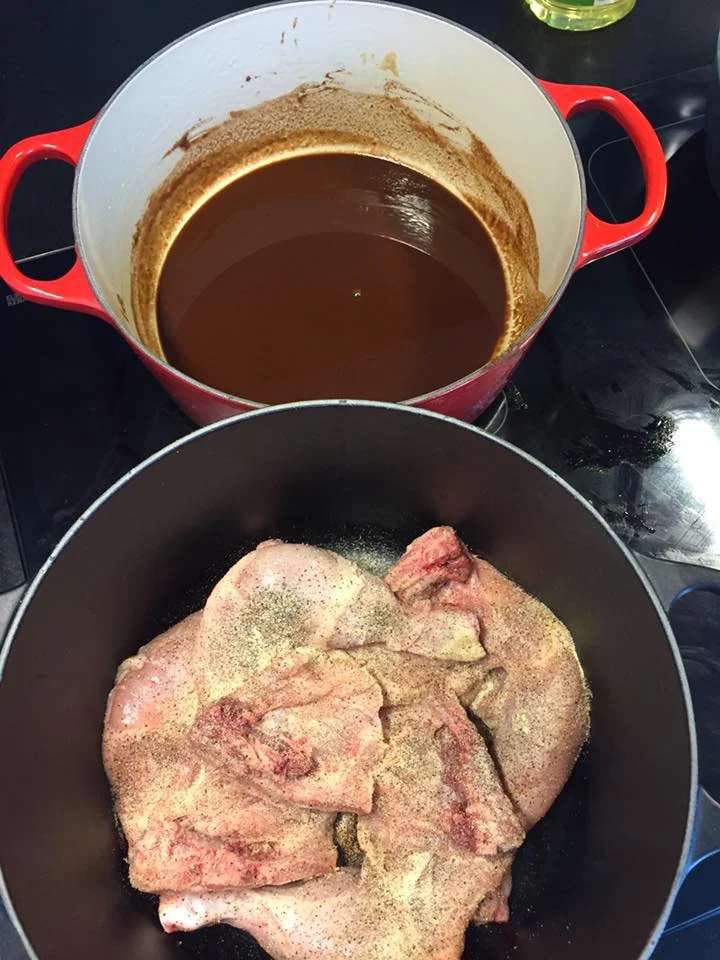
Ingredients
- 1 1/2 pound chicken breast
- 1 large onion
- 1 bell pepper red or green, chopped
- 4 stalks celery, chopped
- 4 bay leaves
- 5 cloves garlic (smoked is best)
- 2 cups flour
- 1/2 stick butter
- 1/4 cup olive oil
- 2 cups white rice (plus 2 cups water to cook)
- salt, pepper & cayenne to taste
- water to cover
Step-by-Step Instructions
- Finely chop onion, bell pepper & celery and set aside.
- Mix pepper, salt and cayenne with the flour in a dish for dredging.
- Cut chicken breast into finger sized strips and coat them with the flour.
- In a large pot (Dutch oven), add some of the butter and olive oil. Hold on to the rest of the butter and oil because you will need to add them in as you cook.
- Start frying coated chicken strips in the oil & butter, removing them as they brown and adding more oil and butter as needed. I hit them with some more cayenne as they come out of the pot.
- After all chicken strips are fried and set aside, add any remaining butter and some of the left over seasoned flour to make a roux. Just add enough to make it thick, but not like a paste…cook to a dark roux (about 15-20 minutes, stirring constantly).
- Add garlic and bay leaves and the chopped vegetables (the trinity). Stir so that all veggies are coated with the roux and start to soften. Fill with water to cover and simmer for about 10-15 minutes. Be sure to check for seasoning, salt and cayenne.
- This is a good time to make the rice. When it starts to look like a gravy add the chicken back in for the last 10 minutes. Again, check the seasoning.
- Once it reaches the thickness you like, serve it on a pile of rice. Garlic bread cut into strips makes a great side and garnish.
Common Problems and Solutions
Q: Why is my roux burning?
A: Keep the heat at medium and stir constantly once you add the flour to the butter. A dark roux takes patience—15-20 minutes of constant stirring. If it starts to smell burned rather than nutty, start over.
Q: Can I make this ahead of time?
A: Yes, étouffée actually tastes better the next day as the flavors meld. Make it up to 2 days ahead and reheat gently on the stovetop, adding a splash of water if it's too thick.
Q: Why is my étouffée too thin?
A: Let it simmer uncovered a bit longer to reduce and thicken. You can also make a slurry with a tablespoon of flour mixed with cold water and stir it in, simmering for 5 more minutes.
Tips and Techniques
Frying the chicken in seasoned flour first leaves flavorful brown bits in the pot that add depth to your roux. The smoked garlic is a game-changer if you can find it—it adds a subtle complexity that regular garlic can’t match. Don’t skip tasting and adjusting seasoning at multiple stages; étouffée should have layers of flavor.
Ingredient Substitutions
- chicken breast: chicken thighs
- smoked garlic: regular fresh garlic
- butter: all olive oil or vegetable oil
- white rice: brown rice
Equipment Needed
- Dutch oven or large heavy-bottomed pot
- Sharp knife and cutting board
- Shallow dish for dredging
- Wooden spoon for stirring roux
Historical Context
Étouffée means “smothered” in French, referring to the technique of smothering protein in a thick, flavorful gravy. While crawfish étouffée is the most famous version, Cajun cooks have always adapted recipes based on what’s available, making chicken étouffée a legitimate and delicious variation.