





Chicken and Sausage Gumbo
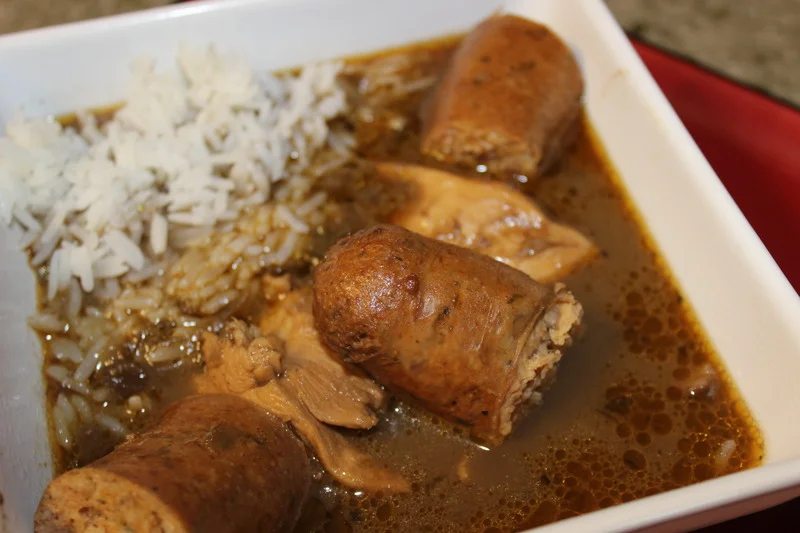
Ingredients
- 1 whole chicken, cut up
- 2 1/2 quart water
- 2 chicken bullion cubes
- 1 cup bell pepper, chopped
- 1 cup celery stalks, chopped
- 1 cup onion, chopped
- 1/4 cup butter
- 1/4 cup oil
- 1/2 cup flour
- 1 (10 oz) bag frozen okra (If using fresh, about 2 1/2 cups sliced, and soak the slices in salt water overnight, then rinse before adding)
- 2 lbs smoked sausage, cut into 1 inch pieces
- salt, pepper, and garlic powder to taste
- 2 tbsp fresh garlic, 4 to 5 cloves
- Tony Chachere's or file' powder to garnish
Step-by-Step Instructions
- In large stock pot, add chicken, water, boullion, and a little salt and pepper. Boil about 30 minutes, or until chicken reaches 165°F and is cooked through.
- Meanwhile, chop veggies (the holy trinity - onions, celery, and bell peppers) and set aside. When chicken is finished, reserve the broth and set the chicken aside to cool slightly.
- In large stockpot, melt butter with oil over medium-high heat until very hot.
- Using a wire whisk, mix in flour. Continue whisking constantly until the roux is the color of peanut butter, about 15-20 minutes. Don’t rush this step or let it burn.
- Quickly add all veggies (onions, celery, bell peppers) and garlic. Continue to cook, stirring constantly, about 3 minutes until vegetables soften slightly.
- Slowly whisk in reserved chicken broth. Add sausage pieces, salt, pepper, and garlic powder. Bring to a boil, then reduce heat to medium-low, cover, and simmer.
- Debone chicken, then add the meat back to the pot. Continue to simmer about 20 minutes, stirring occasionally.
- Add okra and simmer 10 more minutes until okra is tender.
- Serve over hot rice, garnished with a little file’ powder or cajun seasoning.
Common Problems and Solutions
Q: Why is my roux burning?
A: Keep the heat at medium-high and whisk constantly. If you see black specks, you've burned it and need to start over. The roux should gradually darken to peanut butter color over 15-20 minutes.
Q: Can I skip the okra?
A: Yes, okra is traditional but optional. Some people don't care for the texture. You can leave it out or substitute with additional vegetables like diced tomatoes.
Q: How do I know when the gumbo is done?
A: The gumbo is done when the flavors have melded together after simmering, the okra is tender, and the consistency is thick enough to coat the back of a spoon - usually after about 30 minutes of total simmering time.
Tips and Techniques
The key to this gumbo is patience with the roux - don’t rush it or turn the heat too high. If you’re short on time, you can use a rotisserie chicken and skip the boiling step, just add store-bought chicken broth. For deeper flavor, let the gumbo sit overnight in the fridge - it’s even better the next day.
Ingredient Substitutions
- smoked sausage: andouille sausage or kielbasa
- whole chicken: 3-4 lbs chicken thighs or breasts
- frozen okra: fresh okra, sliced (2 1/2 cups)
- file' powder: omit or use extra cayenne pepper
Equipment Needed
- Large stock pot (for boiling chicken)
- Large stockpot or Dutch oven (for making gumbo)
- Wire whisk (essential for making roux without lumps)
- Cutting board and knife (for chopping vegetables and deboning chicken)
Historical Context
Chicken and sausage gumbo is one of the most popular variations of this iconic Louisiana dish. While seafood gumbo gets a lot of attention, chicken and sausage gumbo has always been the everyday gumbo for Cajun families - affordable, filling, and perfect for feeding a crowd. The lighter roux is typical of Lafayette and Acadiana home cooking.