





Nit's Bread Pudding
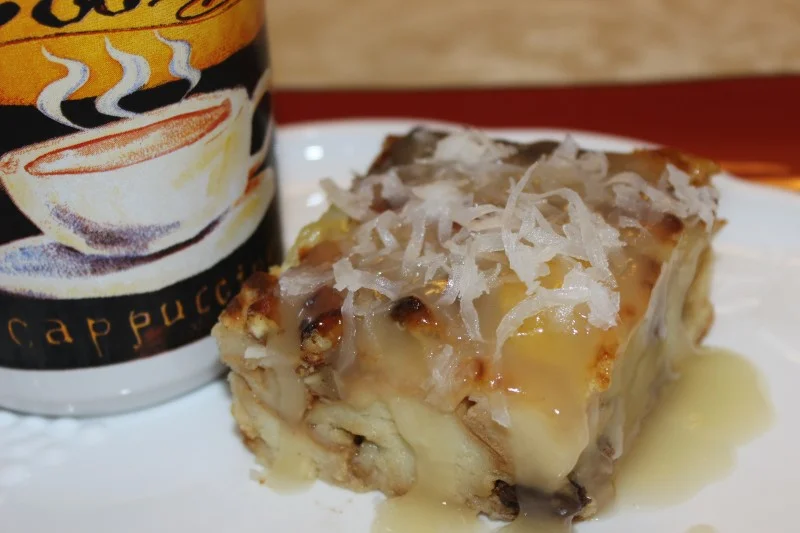
Ingredients
12
servings
- 1 loaf French Bread day-old or slightly stale
- 2 cups milk
- 3 beaten eggs
- 1 cup sugar
- 1 tbsp cinnamon
- 1 tsp vanilla
- 1 cup chopped canned pineapple or crushed pineapple (15 oz can)
- 1/2 cup butter melted
- 1/4 tsp salt
- 1/2 cup chopped pecans or walnuts optional
- 1 cup raisins
- 1 cup coconut optional
Step-by-Step Instructions
- Break the bread into small pieces and place in a large glass bowl. Pour the milk over the bread and let it soak 15 to 20 minutes. After soaking, mash the bread to remove any lumps.
- Combine in a medium bowl the eggs, sugar, vanilla, cinnamon, raisins, pineapple, butter, salt, nuts and coconut (if using) and mix together with the soaked bread mixture.
- Pour into a buttered 8 or 9 inch square pan and bake for 45 minutes at 350 degrees until set in the middle and lightly browned on top.
- Delicious hot or cold and can be served with a topping of sweetened whipped cream, rum or bourbon sauce or Grand Marnier.
Common Problems and Solutions
Q: Why is my bread pudding too dry?
A: Make sure to soak the bread for the full 15-20 minutes and mash it well to remove lumps. The bread should be fully saturated with the milk before adding the other ingredients.
Q: How do I know when the bread pudding is done?
A: The pudding should be set in the middle (not jiggly) and lightly browned on top after about 45 minutes. A knife inserted in the center should come out mostly clean.
Tips and Techniques
If using fresh bread instead of day-old, toast it lightly first to help it absorb the custard mixture better. For extra richness, use half-and-half instead of regular milk.
Ingredient Substitutions
- French bread: day-old white bread or brioche
- canned pineapple: fresh pineapple or peaches, canned peaches, or frozen peaches
- pecans: walnuts or omit
Equipment Needed
- large glass bowl
- medium mixing bowl
- 8 or 9 inch square baking pan
Historical Context
Bread pudding became a staple in Louisiana homes as a way to use stale French bread from the local bakeries. The addition of tropical fruits like pineapple reflects Louisiana’s warm climate and trade history.