





Beignets - A French Doughnut
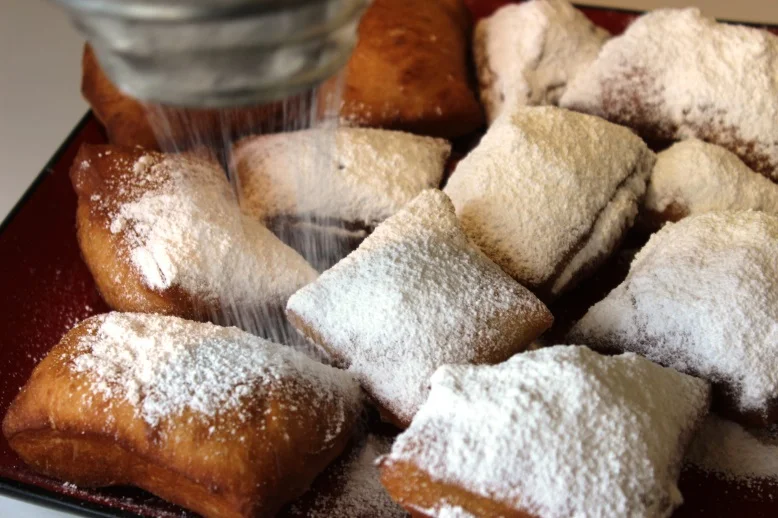
Ingredients
- 1/2 cup shortening
- 1/2 cup sugar
- 2 packages yeast (2¼ tsp or ¼ oz each)
- 6 1/2 cups plain flour
- 1 tsp salt
- 1 cup evaporated milk
- 2 eggs, well beaten
- 1 cup boiling water
- 1/4 cup warm water
- Oil for frying
- Powdered sugar for dusting
Step-by-Step Instructions
- Cream together shortening, sugar, and salt. Once fully creamed, add one cup boiling water and one cup evaporated milk, then set aside to cool to lukewarm.
- In another bowl, mix yeast well in 1/4 cup warm water (about 110°F). Let stand for 5 minutes until foamy. Add this and beaten eggs to the creamed shortening, sugar and salt mixture.
- Add 3 1/2 cups flour and beat with spoon until smooth. Add another 3 cups of flour and mix until a soft dough forms. Put the dough in a greased covered container in the refrigerator for at least 4 hours or overnight.
- When ready to fry, roll out dough on a floured surface 1/4 inch thick and cut into 3 inch squares with a knife. Use a knife to cut a 1/2 inch slit in the middle of each square.
- Heat oil in a deep fryer or heavy pot to 360°F. Fry beignets a few at a time for 2-3 minutes per side until golden brown on both sides. They will puff up as they cook. Drain on paper towels. Dust generously with powdered sugar while still warm. The dough may be kept in refrigerator for up to 3 days.
Common Problems and Solutions
Q: Why didn't my beignets puff up?
A: The oil temperature is critical—if it's too cool, beignets will absorb oil and stay flat. Make sure oil is at 360°F before frying. Also, ensure your yeast was fresh and foamy when proofed.
Q: Can I make these without refrigerating overnight?
A: While refrigeration makes the dough easier to handle, you can let it rise at room temperature for about 2 hours until doubled, then proceed with rolling and frying. Chilled dough is just easier to work with.
Q: Why are my beignets greasy?
A: Oil temperature is too low. Maintain 360°F throughout frying. Also, don't overcrowd the pot—fry just a few at a time so the temperature doesn't drop.
Tips and Techniques
For the lightest, airiest beignets, don’t overwork the dough when rolling it out. The dough should be soft and slightly sticky. Dust generously with powdered sugar immediately after draining—it sticks best to warm beignets. Serve right away for the best texture.
Ingredient Substitutions
- evaporated milk: whole milk or half-and-half
- shortening: butter
- plain flour: all-purpose flour
Equipment Needed
- Deep fryer or heavy-bottomed pot (Dutch oven)
- Candy or deep-fry thermometer
- Rolling pin
- Large mixing bowl
- Greased covered container for refrigeration
Historical Context
The word “beignet” is French for “fritter” or “bump,” and the recipe came to Louisiana with French settlers in the 18th century. While similar to French beignets, the Louisiana version is distinctly square-shaped and always served hot with a mountain of powdered sugar. Cafe Du Monde has been serving them continuously since 1862, making beignets and cafe au lait iconic New Orleans fare.