


Cajun Heritage
Explore our unique French heritage, vibrant music, world-famous cuisine, and rich cultural traditions that make Cajun Country unlike anywhere else on earth.
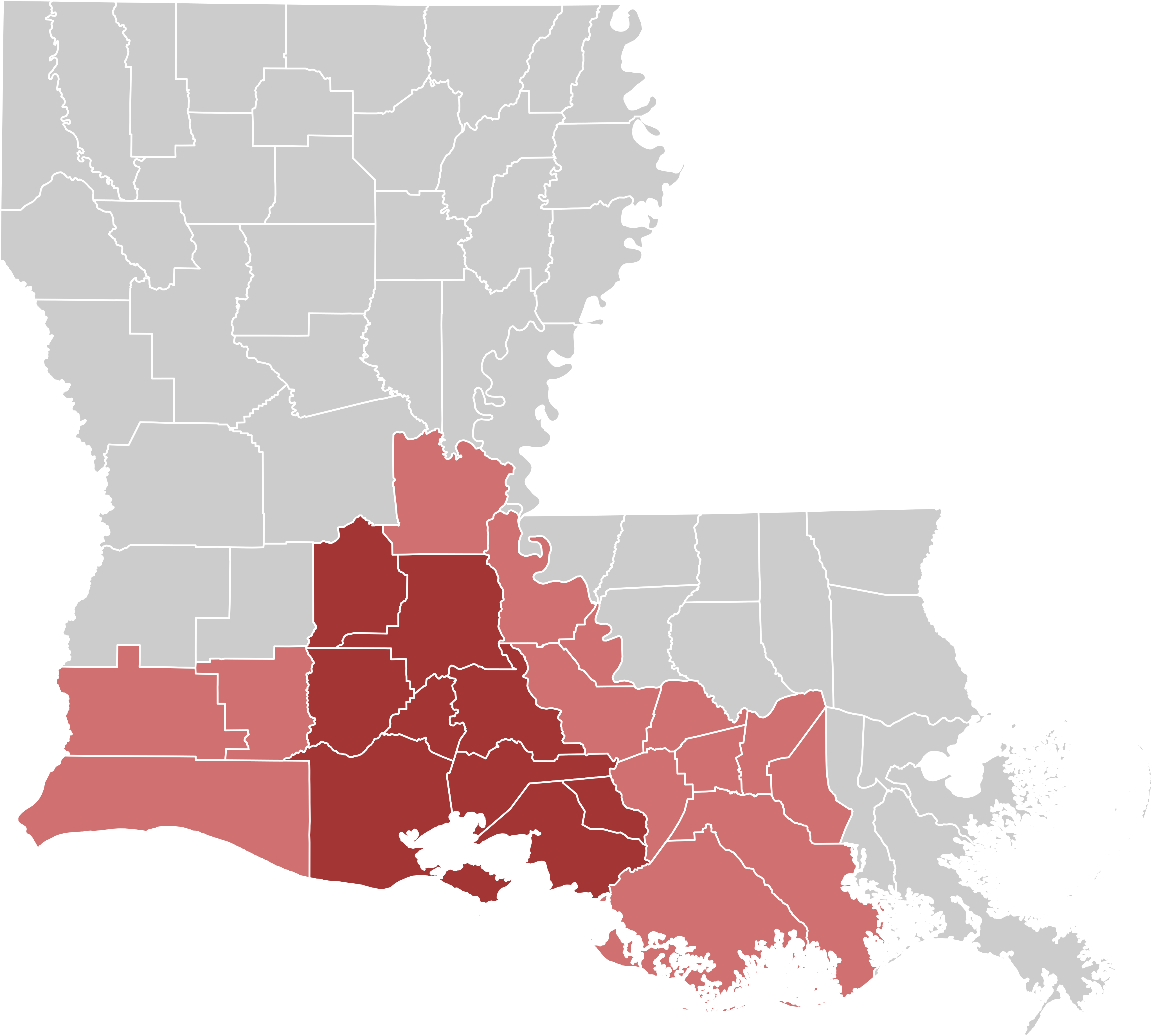
Acadiana, the Cajun heartland, is so rich with culture it could practically be another country. We have our own language, music, humor, and even our own flag. The 22 parishes of South Louisiana designated as “Cajun Country” represent one of America’s most distinctive cultural regions—a place where French is still spoken, where music fills dance halls every weekend, and where food is a way of life.
Quick Links
Our Flag
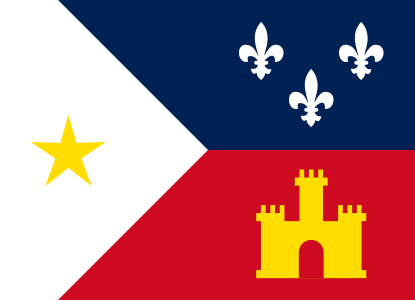
The flag of Acadiana was designed in 1965 by Dr. Thomas J. Arceneaux of the University of Louisiana at Lafayette to commemorate the 200th anniversary of the Acadians’ arrival in Louisiana. Louisiana officially adopted it as the flag of Acadiana in 1974.
The three symbols represent our heritage:
- Gold Castle on Red — Represents the Spanish kingdom, which welcomed and assisted the Acadians in settling their new homeland after the British expulsion
- Silver Fleur-de-lis on Blue — Represents French heritage and ancestry
- Gold Star on White — Represents the Virgin Mary, “Our Lady of the Assumption,” patron saint of the Acadians. It also honors Louisiana’s participation in the American Revolution, when Acadians served under Spanish Governor Gálvez
Today, the Cajun Flag flies throughout Acadiana, usually just below the American and Louisiana flags—a symbol of pride in our unique heritage.
Learn more: Flag of Acadiana | Acadian.org
Our Language
Cajun French is a dialect rooted in 17th-century French, shaped by centuries of isolation in the Louisiana bayous and prairies. While most “baby boomers” grew up speaking Cajun French as their first language, younger generations largely lost the language—a result of decades when speaking French in Louisiana schools was forbidden and even punished.
The Revival
Today, there’s a remarkable revival underway. The Council for the Development of French in Louisiana (CODOFIL), established in 1968, has been instrumental in this renaissance. Currently:
- 36 French immersion schools operate across Louisiana
- 5,500+ students are enrolled in French immersion programs
- The LSU Dictionary of Louisiana French project documents the language from native speakers
Learn More
- CODOFIL — Council for the Development of French in Louisiana
- Louisiana French — Learn French Louisiana programs
- Télé-Louisiane — Louisiana French media
Our History
The word “Cajun” derives from “Acadian” (Acadien → Cadien → Cadjin → Cajun). The Acadians were French colonists who settled in what is now Nova Scotia, New Brunswick, and Prince Edward Island in the early 1600s. “Acadie” means “earthly paradise” in the language of the Mi’kmaq people who inhabited the region.
Le Grand Dérangement
Between 1755 and 1764, the British forcibly expelled over 10,000 Acadians from their homeland in one of history’s largest ethnic cleansing campaigns. Families were separated, villages burned, and people scattered across the Atlantic world. Many eventually made their way to Spanish Louisiana, where they were welcomed and given land to settle.
Building a New Home
The Acadians adapted brilliantly to their new environment—the swamps, prairies, and bayous of South Louisiana. They learned from Native Americans, enslaved Africans, Spanish colonists, and later immigrants, creating the unique Cajun culture we know today. The “Cajun” identity emerged in the late 18th century as these displaced Acadians forged a new community while maintaining their French language and Catholic faith.
Until World War II, “Cajun” was sometimes used as a slur, suggesting an uneducated person who spoke broken English. But beginning in the 1940s and 1950s, Cajuns reclaimed their identity with pride. Today, Cajun culture is celebrated worldwide.
Visit our Acadiana towns page to see the nearly 700 communities that make up this region.
Acadiana: The Name
The word “Acadiana” is a portmanteau—a blend of two places that define Cajun identity: Acadia, the Canadian homeland from which our ancestors were expelled, and Louisiana, where they built a new life. The name itself captures the Cajun story: roots in one place, home in another.
How the Name Came to Be
The first recorded use of “Acadiana” appeared on October 15, 1946, in the Crowley Daily Signal, a local newspaper that coined the term to describe the French-speaking region of South Louisiana.
But there’s another story—more colorful, and very Cajun. Around 1963, someone at a Lafayette television station noticed an invoice addressed to “Acadiana Television Corp.” A typist had accidentally added an extra “a” to the end of “Acadian.” Rather than a mistake, it was immediately recognized as perfect: a single word that married the old country with the new. The station started using it, and the name stuck.
Official Recognition
In 1971, Governor Edwin Edwards signed legislation officially designating 22 parishes as Acadiana, with Lafayette at its geographic heart. The bill recognized parishes with “strong French Acadian cultural aspects,” making “The Heart of Acadiana” the official name for the region.
Today, the term appears on highway markers, regional maps, and in the hearts of everyone who calls this place home. It’s more than geography—it’s identity.
Our Food
Cajun cuisine is among the most distinctive regional foods in America—though it’s often misunderstood. While outsiders think “insanely spicy,” authentic Cajun cooking is more seasoned than peppered. We build layers of flavor, not just heat.
The Holy Trinity
Nearly every Cajun dish starts with the “Holy Trinity”: onions, celery, and bell peppers—our answer to the French mirepoix. Add garlic (sometimes called “the Pope”), and you have the foundation of Cajun flavor.
Essential Cajun Cooking
- The Black Iron Pot — Cast iron cookware, often passed down through generations, is essential for proper Cajun cooking
- The Roux — A slow-cooked mixture of flour and fat that forms the base of gumbo, étouffée, and countless other dishes
- Tabasco — Made on Avery Island, Louisiana since 1868, this iconic pepper sauce represents Louisiana worldwide
Browse our recipe collection for authentic Cajun dishes from Louisiana families.
Our Art
Cajun and Louisiana art reflects our unique cultural landscape—from the moss-draped oaks and bayou scenes to the vibrant colors of Mardi Gras and the spiritual traditions of our people.
Notable Artists
These artists capture life in Acadiana, preserving moments of everyday beauty that might otherwise be forgotten. Their work ranges from folk art passed down through generations to contemporary pieces displayed in galleries worldwide.
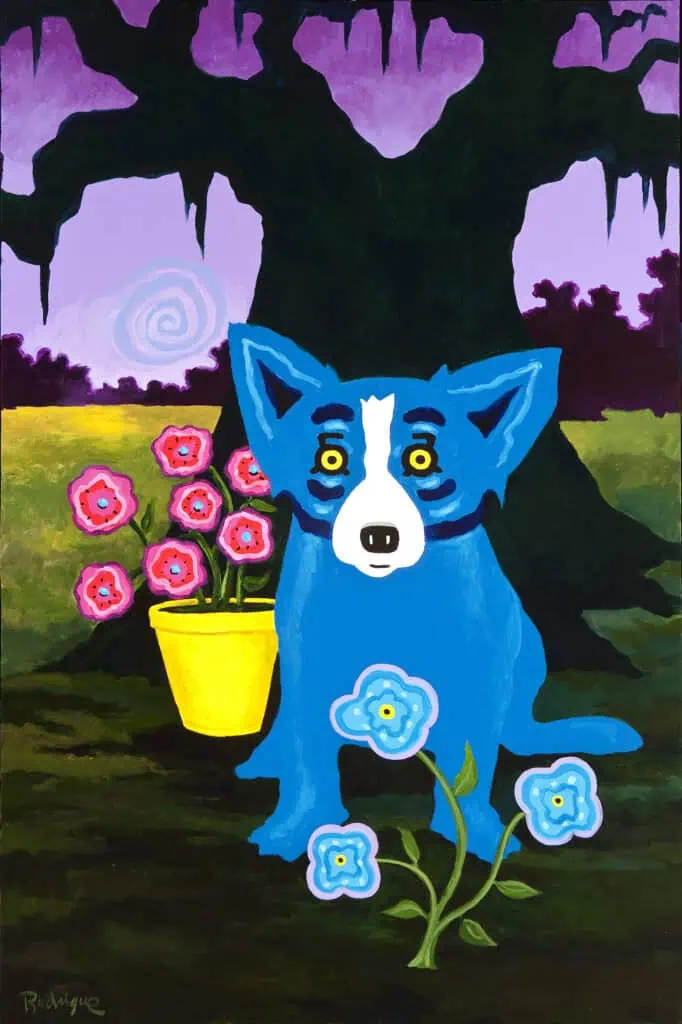
George Rodrigue (1944-2013) — Creator of the iconic Blue Dog, inspired by the Cajun legend of the loup-garou (werewolf). His Louisiana landscape paintings and Blue Dog series brought Cajun imagery to international fame. georgerodrigue.com
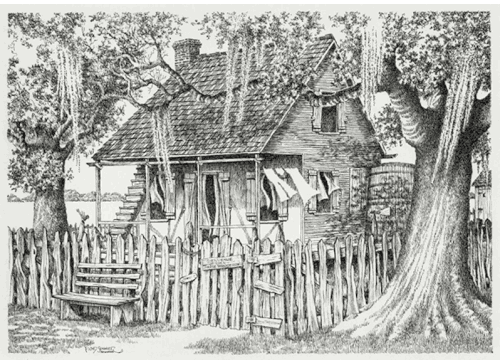
Floyd Sonnier (1939-2020) — “Beau Cajun.” His pen-and-ink drawings captured traditional Cajun life—rice harvests, boucheries, fais do-dos—with warmth and authenticity. He produced over 400 major works in 27 years. floydsonnier.com
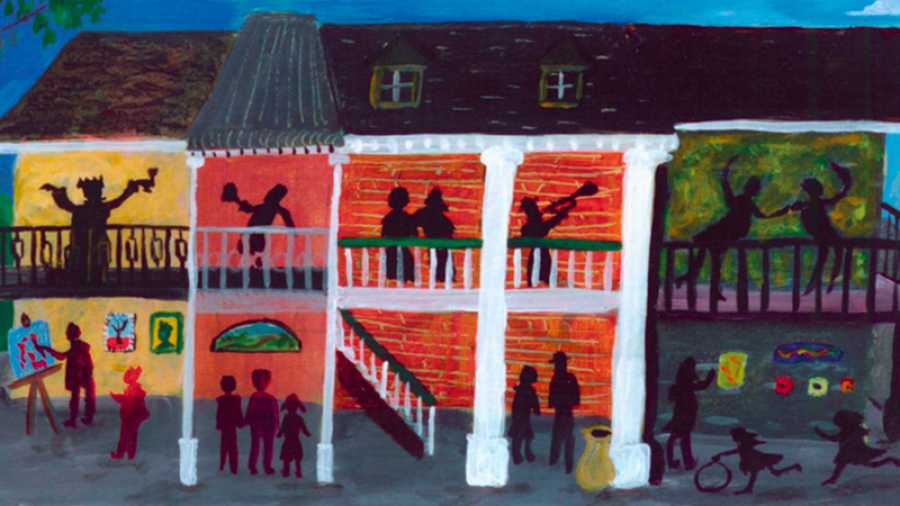
Paul Schexnayder — New Iberia artist known for vibrant, whimsical paintings of musicians, dancers, and Louisiana wildlife. Despite being colorblind, his intensely colorful acrylics have made him a beloved figure. Also author/illustrator of children’s books including The Gumbo Gators series. schex.com
Roz LeCompte — Acadiana artist creating abstract folk art and mixed media works. Featured in the Ogden Museum of Southern Art’s Louisiana Contemporary exhibition (2022). Her installation “Femme Unmuted” explored women reclaiming their voices. rozlecompte.com
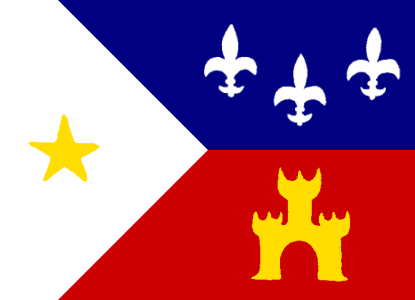
Erotica Nicole “Niki” Barton (1980-2012) — Born to Mary Frederick of Kaplan, Erotica was a Lafayette artist whose love for Cajun culture shone through her work. Her painting of the Acadiana flag is used throughout this site. Gone too soon, but her art lives on.
Children’s Books
Louisiana has produced beloved children’s literature that brings bayou life to young readers across the country.
James Rice & Gaston the Green-Nosed Alligator
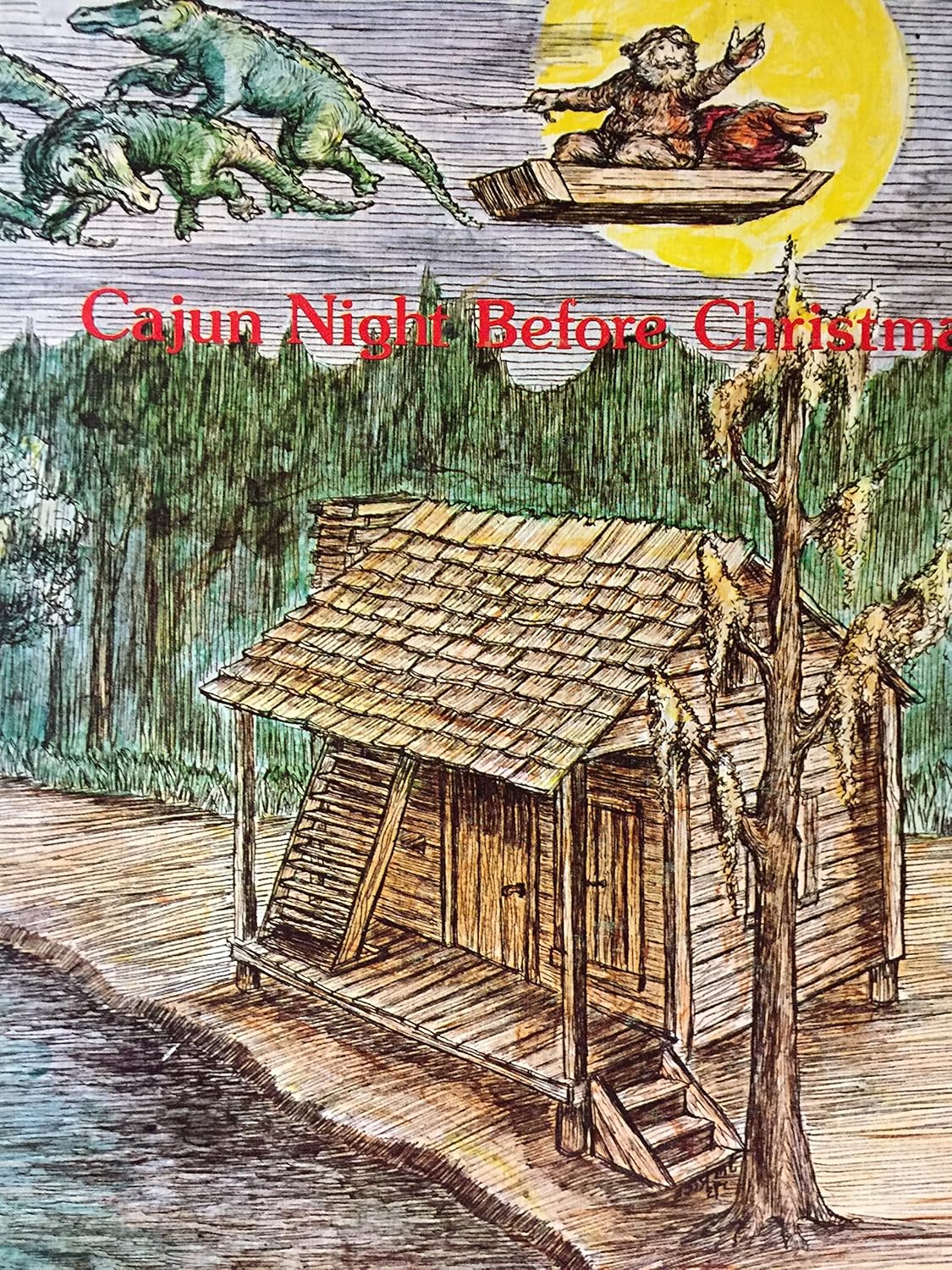
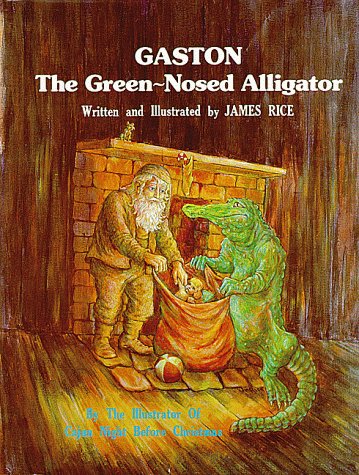
James Rice (1934-2004) created the Deep South’s most beloved children’s book character: Gaston, the green-nosed alligator. First appearing in the 1973 classic Cajun Night Before Christmas, Gaston became Louisiana’s answer to Rudolph—pulling Papa Noel’s sleigh through the bayous on Christmas Eve.
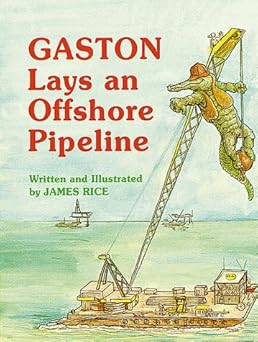
Rice went on to write and illustrate over sixty children’s books, with more than 2.5 million copies in print. The Cajun Night Before Christmas actually launched Pelican Publishing Company’s children’s book division.
Connie Collins Morgan
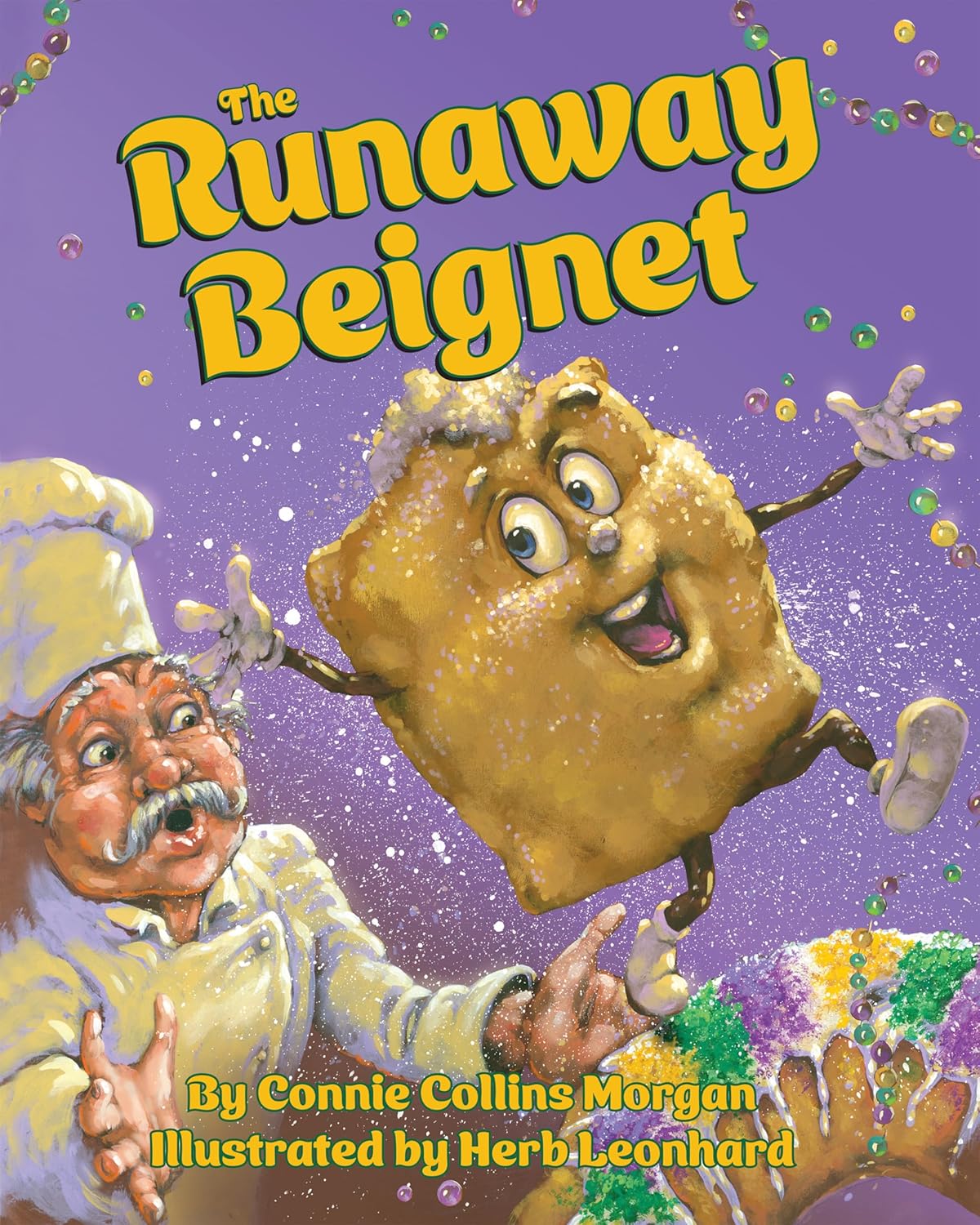
Connie Collins Morgan grew up in Lafayette with her Cajun family, the nearby bayous fueling an imaginative mind that would later produce some of Louisiana’s most beloved modern children’s books.
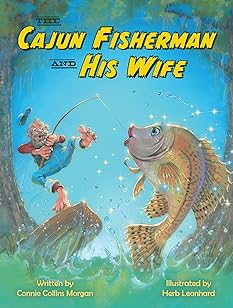
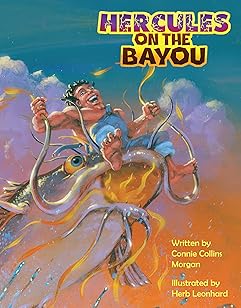
Her books blend Louisiana folklore with classic storytelling traditions. The Runaway Beignet puts a Cajun spin on the Gingerbread Man. The Cajun Fisherman and His Wife reimagines the Brothers Grimm tale on the bayou. And Hercules on the Bayou drops the Greek hero into South Louisiana, where he fights mosquitoes, invents the crawfish boil, and captures a giant fiery catfish guarding the underworld.
Cajuns on the World Stage
Louisiana talent has long made its mark far beyond the bayous.

Edward Granger — Born in Eunice (1989), Granger is a Louisiana-born artist known for geometric abstraction and vibrant murals. His work has been featured at Art Basel Miami, appeared in The New York Times, and graces collaborations with luxury brands including Hermès and BMW. He studied architecture at UL Lafayette. egranger.com
Henri Bendel (1868-1936) — Born in Vermillionville (now Lafayette) to a Jewish family in Cajun Country, Bendel moved to New York City and founded the legendary Henri Bendel boutique in 1895. He was the first retailer to bring Coco Chanel to America and became so iconic that he’s got a street named after him near the The Heyman Center in Lafayette. His flagship store on Fifth Avenue was a fashion institution for over a century until closing in 2019. A true “Cajun by the back door.”
Jewish and Cajun communities have deep ties in Louisiana—shared histories of displacement and tight-knit families. Even the town of Kaplan was founded by Abrom Kaplan, a Polish-Jewish immigrant and rice magnate.
Sammy Kershaw — Born in Kaplan (1958), this country music star rose from singing in Louisiana honky-tonks to Billboard chart success. His hits “She Don’t Know She’s Beautiful” and “Cadillac Style” made him a 1990s country radio staple. He was also briefly married to Lorrie Morgan, country royalty and daughter of Grand Ole Opry legend George Morgan.
Our Music
Cajun music is the heartbeat of our culture—played at dance halls, festivals, weddings, and family gatherings throughout Acadiana. Rooted in the folk traditions of French-speaking Acadian exiles, it blends Indigenous American, African, and European influences into something uniquely Louisiana.
Cajun French in the Spotlight
In October 2025, Dustin Gaspard from Cow Island made history as the first person to sing in Cajun French on NBC’s The Voice, earning a 4-chair turn with his bilingual rendition of “Bring It On Home To Me.”
Featured: Jourdan Thibodeaux
Jourdan Thibodeaux from Cypress Island is one of the most exciting voices in Cajun music today. A native Cajun French speaker, his soulful singing and fiddling carry forward the traditions while pushing the music into new territory.
His Instagram reels have become a window into everyday Cajun life—cooking, music, and the French language spoken naturally, the way his grandparents did.
Follow Jourdan on Instagram for more.
“Tu vis ta culture ou tu tues ta culture, il y a pas de milieu.” (“You either live your culture or you kill your culture. There’s no in between.”)
Notable Musicians
Dewey Balfa (1927-1992) — Legendary fiddler who brought Cajun music to the Newport Folk Festival in 1964, sparking a cultural renaissance. His family continues the tradition today.
Sheryl Cormier — The “Queen of Cajun Music.” One of the few prominent accordionists in the scene, she’s been performing for decades and remains a powerful presence at 79.
Ann Savoy — Musician, author, and historian. Her book Cajun Music: A Reflection of a People is the definitive encyclopedia of Cajun music. Performs with the Magnolia Sisters and recorded with Linda Ronstadt on the Grammy-nominated Adieu False Heart. annsavoy.com
Michael Doucet — Fiddler and founder of BeauSoleil, the Grammy-winning band that has toured internationally for over 40 years, bringing Cajun music to world stages.
Christine Balfa — Carrying forward her father Dewey’s legacy, she’s a torchbearer for traditional Cajun music and culture.
Wayne Toups — The “King of Zydecajun.” Grammy-nominated accordionist who blends Cajun, zydeco, and rock into a high-energy sound that’s packed dance halls for decades. His signature song “Take My Hand” is a Louisiana anthem.
Travis Matte — Crowley-born accordionist and bandleader of Travis Matte and the Zydeco Kingpins. Known for his energetic live shows and keeping zydeco and Cajun music alive for younger generations.
Listen to Cajun Music
- KRVS 88.7 FM — Radio Acadie, UL Lafayette’s public radio with 70+ hours weekly of Louisiana music
- BeauSoleil — Grammy-winning traditional Cajun band led by Michael Doucet
- Louisiana Folk Roots — Preserving and promoting Louisiana traditional music
Our Festivals
Louisiana has a festival for almost everything—and they’re not just in New Orleans. Almost every town in South Louisiana has its own Mardi Gras celebration, and many communities triple in population on Mardi Gras day.
Major Festivals
- Festivals Acadiens et Créoles (Lafayette) — The largest Cajun and Creole music festival
- Courir de Mardi Gras — Traditional rural Mardi Gras runs in towns like Mamou, Church Point, and Eunice
- Breaux Bridge Crawfish Festival — Celebrating the “Crawfish Capital of the World”
- Zydeco & Blues Festival (Mamou) — Celebrating Louisiana’s African-Creole music traditions
- Louisiana Cajun-Zydeco Festival (New Orleans) — Free festival in Armstrong Park
- Bastille Day Celebration (Kaplan) — Honoring French heritage. RIP thought, now it’s Cajun Food Fest.
Our Humor
Cajun humor is a cornerstone of the culture—self-deprecating, absurd, and always delivered with a wink.
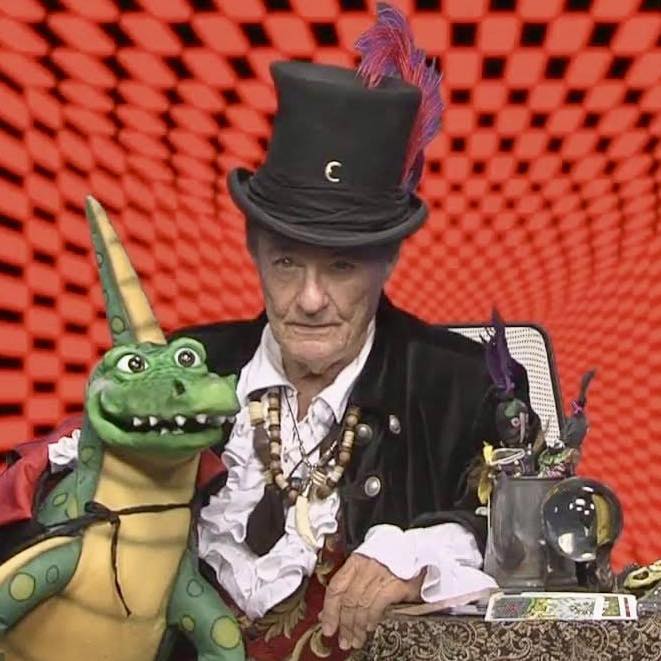
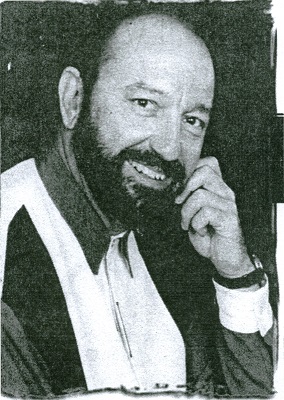
Ken Meaux — The Great Boudini — For kids growing up in Lafayette during the late ’80s and early ’90s, the Great Boudini was a household name. This Kaplan-born magician, ventriloquist, and TV host entertained Acadiana children on Fox 15 for over a decade, alongside his sassy alligator sidekick CoCo. Meaux was also the cartoonist behind “Bec Doux et Ses Amis,” the world’s only Cajun comic strip. Decades later, Boudini lives on in a new animated series on LPB and Télé-Louisiane. kenmeaux.com
Ralph Begnaud — Lafayette’s beloved Cajun humorist and storyteller. A living legend recognized by the Acadian Museum, Ralph has spent decades making audiences laugh with his tales of bayou life, Cajun characters, and the absurdities of growing up in South Louisiana. Acadian Museum Living Legend
You Know You’re Cajun If…
- You’ve ever had Community Coffee and boudin for breakfast
- Your ancestors are buried above ground
- You know the difference between Creole and Cajun (and it’s complicated)
- You measure distance in time, not miles
- You’ve been to a fais do-do (Cajun dance party)
- You call your grandmother Mawmaw and grandfather Pawpaw
- You know that lagniappe means “a little something extra”
Experience Cajun Culture
Vermilionville
Vermilionville is a 23-acre living history museum in Lafayette, along the banks of Bayou Vermilion. It depicts Acadian, Creole, and Native American cultures from 1765-1890 through restored historic buildings, costumed interpreters, and cultural demonstrations.
- La Cuisine de Maman restaurant serves traditional Cajun meals
- Sunday dances feature live local bands
- Open Tuesday-Sunday, 10am-4pm
- 1600 Surrey Street, Lafayette, Louisiana
Acadian Village
A recreated 19th-century Cajun village in Lafayette featuring original historic homes and buildings.
Jean Lafitte National Historical Park - Acadian Cultural Center
Free national park site in Lafayette with exhibits on Cajun history and culture.
Preserve Cajun Heritage
Help keep Cajun culture alive for future generations:
- CODOFIL — Support French language education in Louisiana
- Louisiana Folk Roots — Preserving traditional music and folklife
- Acadian.org — Acadian genealogy and historical resources
- Vermilionville — Living history preservation
“Tu vis ta culture ou tu tues ta culture.”